Madrid Food Guide: What to Eat, Where to Eat, and Insider Tips
If you’re visiting Madrid and want to know what to eat in Madrid, you’re in the right place and I couldn’t be more excited for you! Madrid is a true foodie’s dream — a city where phenomenal restaurants, iconic Spanish dishes, and international cuisine come together. In other words, eating here is one of the best things to do, and I can’t wait to share all the must‑try foods of Madrid!
As the capital of Spain and a major European city, Madrid is home to some of Spain’s iconic dishes, best and/or historic restaurants. For example, it is home to Guinness World Records’ oldest (continuously running) restaurant in the world and the internationally-beloved patatas bravas.
As a frequent visitor, a major foodie, and a celiac – this is the ultimate Madrid food guide that shares all the traditional foods to try, the best restaurants to try them, including gluten free restaurants!
⚠️ Read this on a full stomach, otherwise you might be booking a flight.😂
Disclaimer: This post has affiliate links that can help me earn a small commission, at no extra cost to you. If you click through and buy with these links, thank you in advance for the extra support.💖😊
What to Eat in Madrid (And the Best Places to Try Each Dish)
Don’t have time to read yet? Grab my Quick Recommendations!👇
✨ Book your Museo del Prado Entry Ticket and/or Royal Palace Entry Ticket.
🇪🇸 Guides: One Day in Madrid, 3-day Itinerary, Hidden Gems, Gluten Free Restaurants
🏡 These are the Best Areas to Stay in Madrid
🗺️ Insurance: Protect yourself on your trip with Travel Medical Insurance.
📱 Connect: Always stay connected, and do so seamlessly, with a Spanish eSim!
🧳 Got bags? Use Bounce (my favorite) to find the perfect spot to drop them off!
Churros con Chocolate
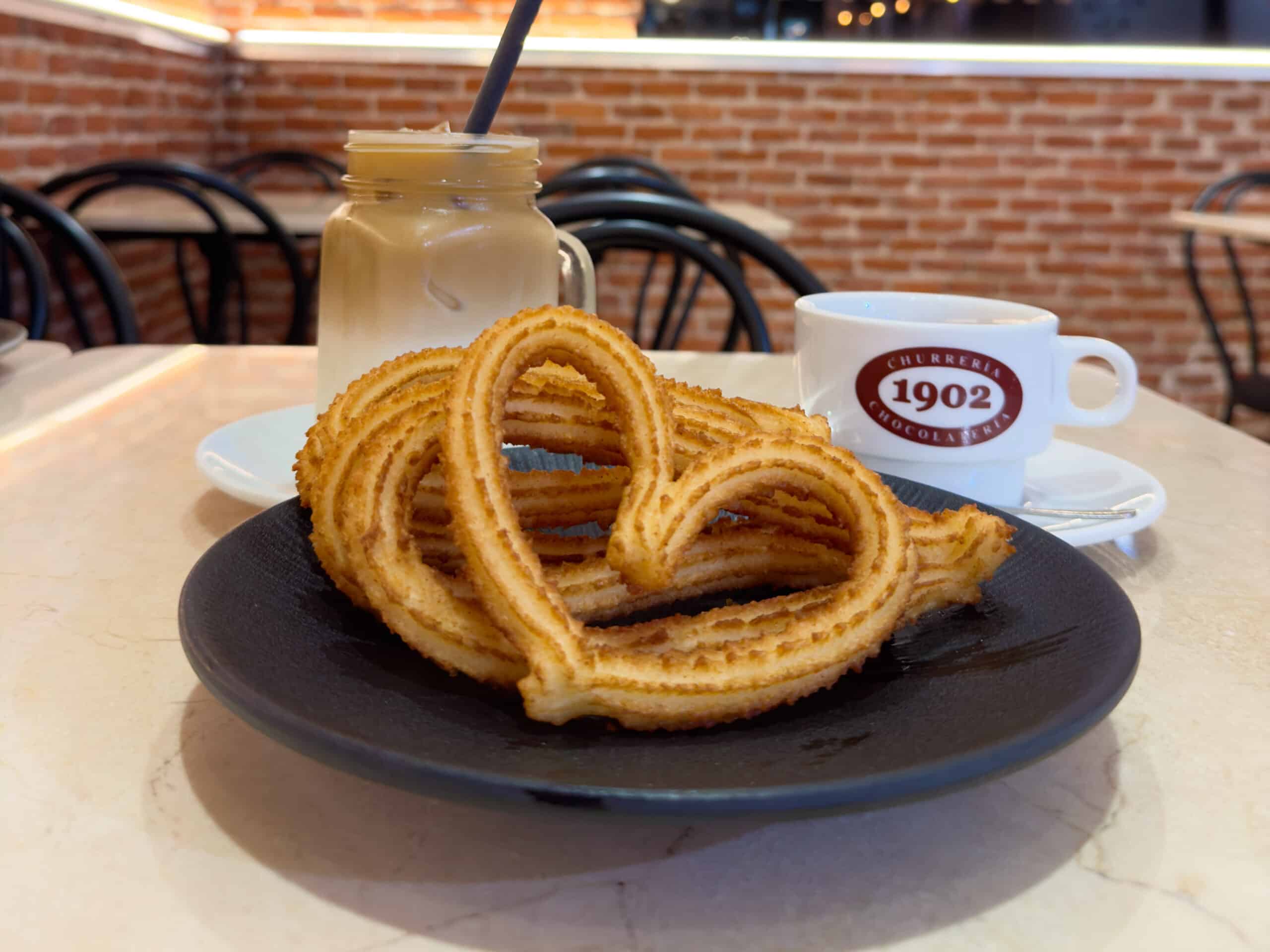
Whether you have it for breakfast, as a snack, or a late night indulgence – churros con chocolate are a non-negotiable when in Madrid!
Churros are an unsweetened fried-dough delicacy that one enjoys by dipping them in hot chocolate or in sugar. This dough is thin and crunchy with a star-like shape, and in Madrid they’re traditionally served in a loop shape.
In Madrid you also have porras, which have a doughier-dough as they are traditionally made with regular flour and a leavening agent. They are much larger due to how airy they are, and are not as crunchy as churros.
As a fun little note, in case you’re traveling around Spain, depending on where you are – some cities’ churros are Madrid’s porras. Madrid is one of the few cities that differentiates churros and porras. For example, churros in Granada are the equivalent of porras in Madrid.
If you’re celiac or gluten intolerant, the best place to grab churros con chocolate is Chocolatería 1902. This place offers both gluten-containing and gluten-free options, all prepared separately – making it the perfect place for everyone to go!
Another very famous place in Madrid for churros is Chocolatería San Ginés, which dates back to 1894 and is the oldest of the city. This place is beloved amongst both locals and tourists, but has certainly become a tourist “activity” and is always packed.
Tostada de Tomate / con Jamón
Not a fan of sweet breakfasts? No worries — here’s another iconic choice!😉
Tostada de tomate is toast with grated tomato, olive oil, and salt. For an extra touch of magic, I highly recommend ordering it with jamón serrano on top. To order it you’d ask for a “tostada con tomate, aceite y jamón”.
This is a breakfast item you’ll find wherever you go in Madrid, from breakfast spots to cafes and beyond.
If you’re celiac, you can order this at Chocolatería 1902 — a famous café known for churros but also for its wide variety of gluten‑free foods, including tostada.
Cocido Madrileño
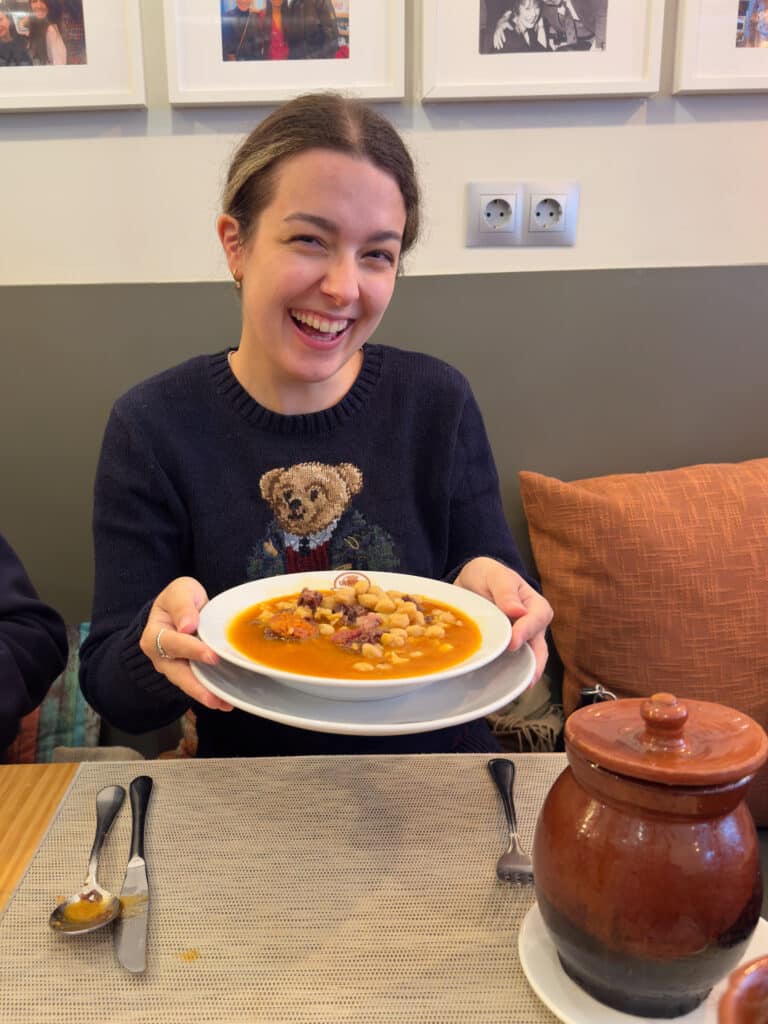
One of the city’s most traditional dishes is the cocido madrileño, which is essentially a very flavorful and hearty stew.
This stew has a thick meat broth and comes with chickpeas, pork, chorizo, and even chicken. Traditionally, this stew is served with fideos which are small spaghetti-like pasta – if you’re celiac (like me), this stew comes with rice!
The tradition with cocido madrileño is to make “La Pringá” once you’re done with the stew and you’re left with the “hard” ingredients. La Pringá is essentially the mashup of all those ingredients, and you can even add tomato sauce, onion, and cabbage.
One of the best places to enjoy a traditional cocido is La Rayua restaurant. Cocido madrileño is their specialty, and you’ll quickly notice that most people come here solely for this dish.
This is a very filling dish, so make sure you come on an empty stomach and endless ganas (“desire”) to eat.
Furthermore, this is the perfect winter or cold-weather meal – I strongly advise against eating this in warm weather.😂
I recommend reserving your table a day or two in advance. You can call or walk in the day of, but the restaurant can easily book out!
Paella (or Arroz)
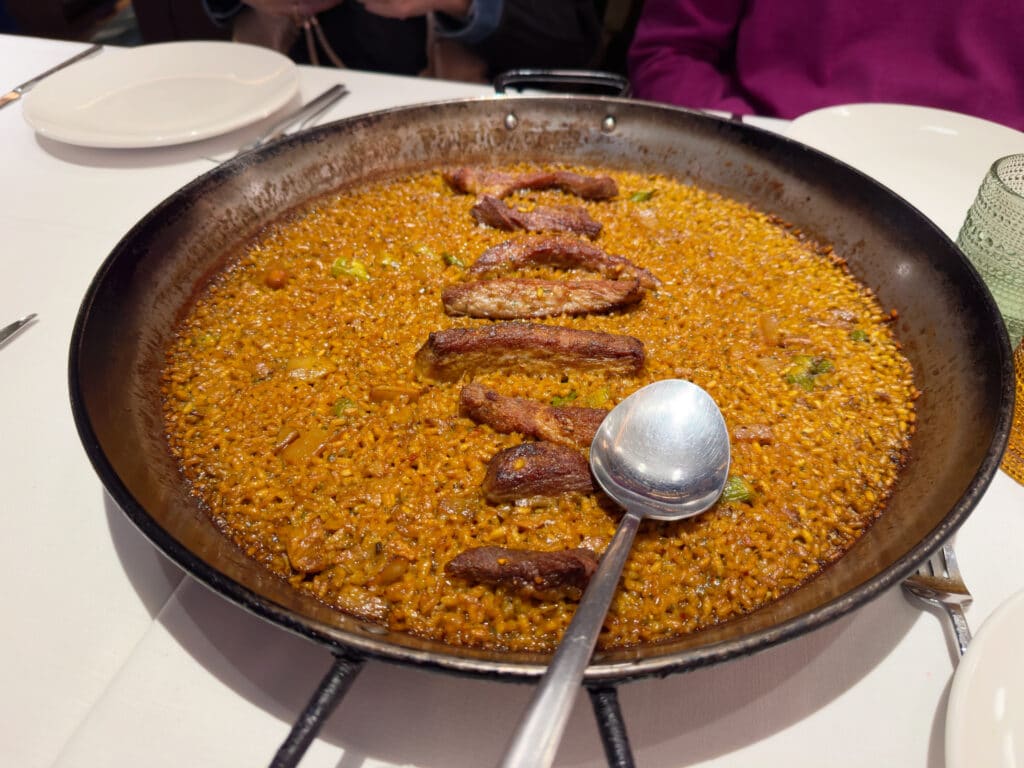
What’s a trip to Spain if you don’t have a delicious paella or arroz?😍
Paella is from Valencia, the rice capital of Spain, but you can rest assured that in Madrid you’ll enjoy incredible rice dishes!
Despite both being rice-based dishes, Paella and Arroz are different from each other. Paella is a dish that originates in Valencia and is made with a paellera “paella pan”, has a specific cooking process and ingredients.
For example, Paella is traditionally made with saffron and always has a socarrat — a crisp, flavorful layer of rice at the bottom of the pan.
Arroz on the other hand is prepared similarly, but doesn’t necessarily have the traditional paella ingredients or cooking method.
One great place to try either Paella or Arroz is La Taberna de Peñalver, which has 3 locations around Madrid. The minimum portion is for 2 people, and when I visited with my family (group of 4) we all shared 2 arroces: Arroz Negro and Arroz de Secreto Iberico.
This beloved restaurant books out quickly, book your table here!
Cochinillo
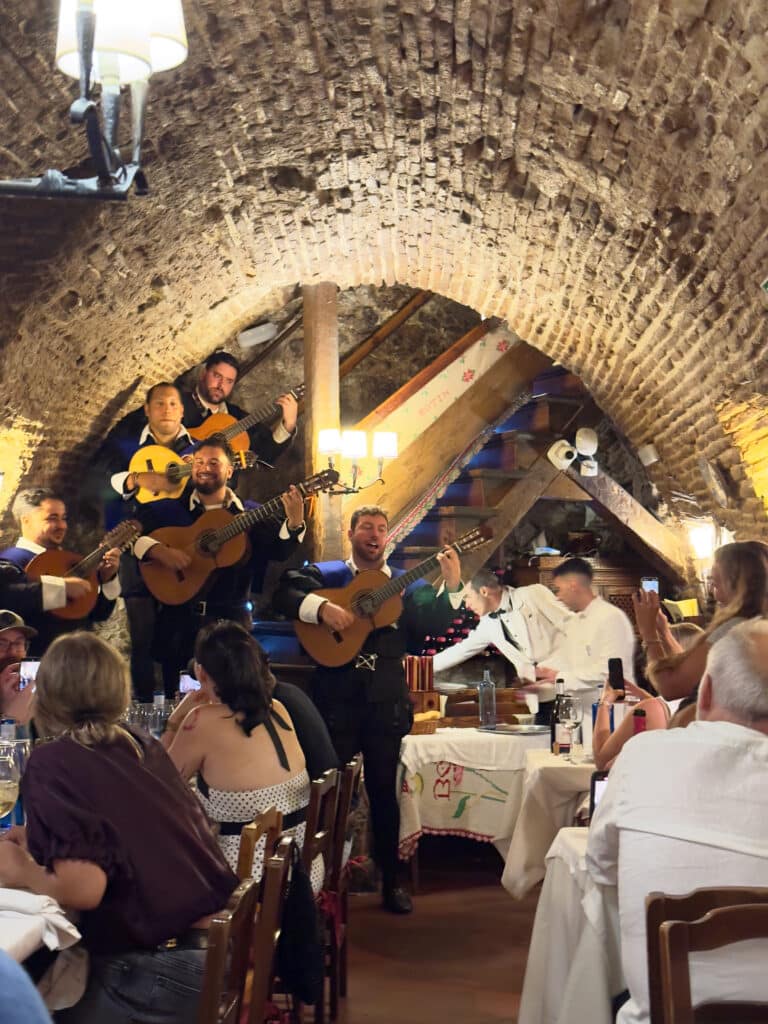
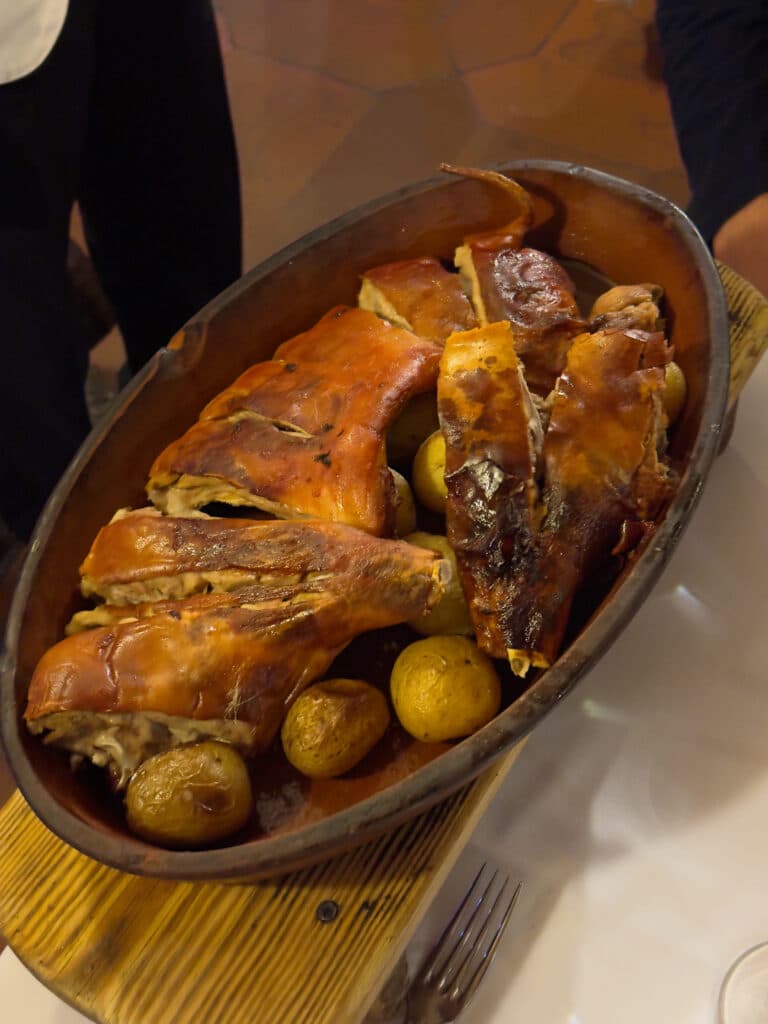
One of the most iconic dishes to try in Madrid is the Cochinillo, roasted suckling pig.
While this dish is more local to the nearby city of Segovia, Madrid is a city that enjoys cochinillo frequently – from roasted to fried.
As someone who doesn’t like fatty meat, the suckling pig is a “perfect-but-heart-wrenching heartbreak”. It’s perfect because it has very little fat, but it quickly becomes a heartbreak when you realize it has little fat because it didn’t grow old enough to be more fatty…🥲
The best and most iconic restaurant to try a cochinillo asado is Restaurante Botín, which is recognized by Guinness World Records as the oldest (continuously running) restaurant in the world! It dates back to 1725, meaning it’s over 300 years old.🤯
At Botín, the roasted suckling pig is prepared in their historic, 300+ year old fire-wood oven, which has never been put out!
Note: this piglet feeds 6 to 7 people. Unless you are in a big group, you will receive single portions – not the full piglet.
Make sure to reserve your table ASAP – this restaurant books out months in advance!
Bocadillo de Calamares
Also known as the Bocata de Calamares, the bocadillo de calamares is a gastronomic icon that originates in Madrid.
This is a deep-fried calamari sandwich and the bread is baguette-like, crunchy on the outside and soft on the inside.
The bocadillo is the star street food of Madrid, and Plaza Mayor – one of Madrid’s main squares – is surrounded with some of the best restaurants for it.
While there isn’t a specific date as to when this sandwich was born, its origins can trace back as the late 1800s. Some say that this dish was created to have a more caloric food item for the working-class, and became popular for its flavor and affordability.
If you’re celiac, Chocolatería 1902 makes gluten free Bocadillos de Calamares. I personally haven’t tried it yet because I always go there for churros, but I’ll make sure to try it next time I’m in Madrid.😍
For the non-celiacs, the most beloved and famous place to get a bocadillo de calamares is Bar La Campana. Sitting right outside of Plaza Mayor, this historic bar is right in the heart of Madrid.
With over 18,000 reviews on Google, it’s clear that this is a very famous spot, among both locals and tourists. Based on this, I would recommend you go line up when you’re semi-hungry and not starving.😂
Huevos Rotos
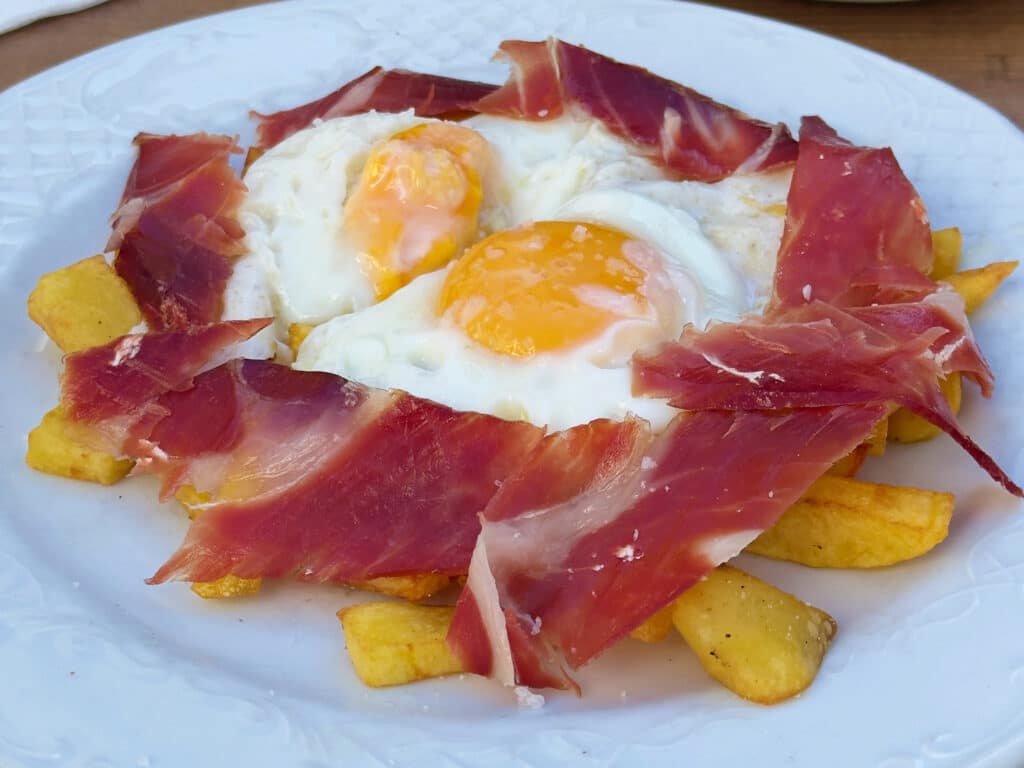
Also known as “huevos estrellados”, huevos rotos is an iconic dish in all of Spain but is very beloved in Madrid.
This humble and super-caloric dish consists of french fries, sunny‑side‑up eggs, and jamón serrano.
I still remember the first time my Spanish boyfriend introduced me to this dish, and I could not wrap my head around it. I thought to myself, “how is this a meal”?😂
When I tell you that this flavorful dish grows on you so quickly… You’ll probably become obsessed when you first try it!😍
This is a dish you can find pretty much anywhere, from restaurants to bars and food halls.
Tortilla Española
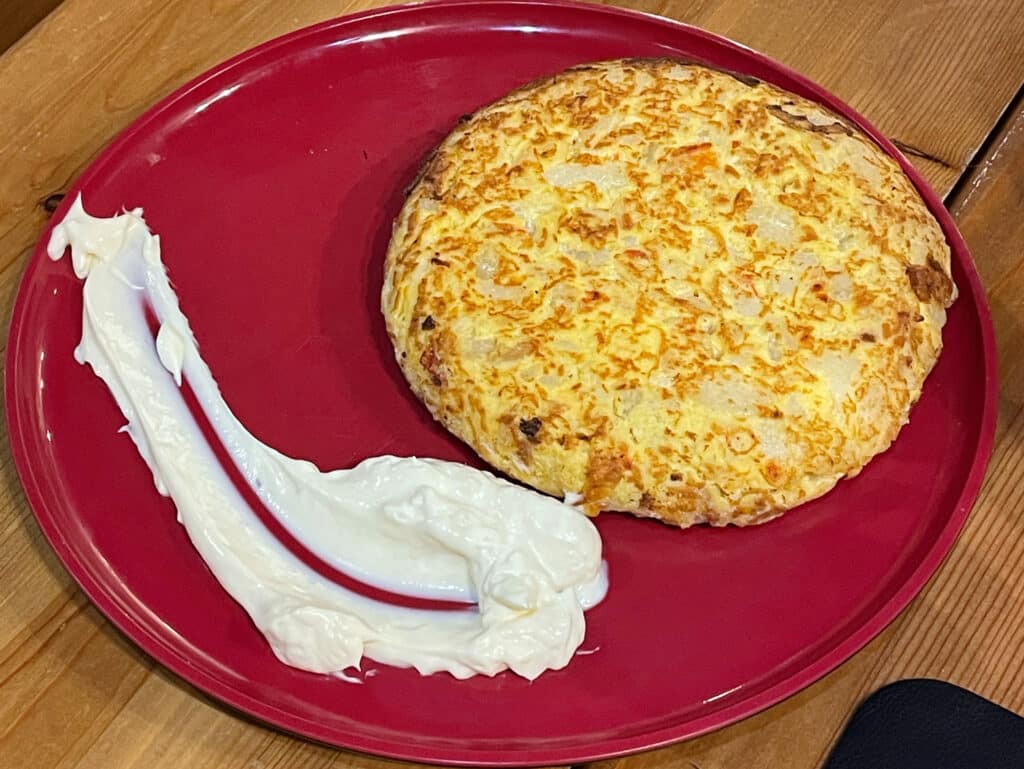
Tortilla española, also known as the Spanish Omelette, is an iconic dish to Spain that one simply cannot miss out on.
It is traditionally made with eggs and thinly sliced potatoes, and depending on where you go or who you talk with, some are team “con cebolla” or “sin cebolla” – with or without onion.
Prepared in a pan and with potatoes, a tortilla española is much thicker than a regular omelette.
One thing that is important to know is that here in Spain, a good tortilla is one that has a runny or at most, gooey, center.
Oftentimes the locals recognize that some tourists don’t feel comfortable with a runny omelette, so if that’s your case – you can ask them to cook it for longer.
This dish is usually served with some aioli, so make sure to try at least one bite with aioli.😍
To dive deeper into Spanish cuisine and culture though, I highly recommend trying the tortilla española the local way, and with a runny center! It’s safe and nothing short of delicious.
Patatas Bravas
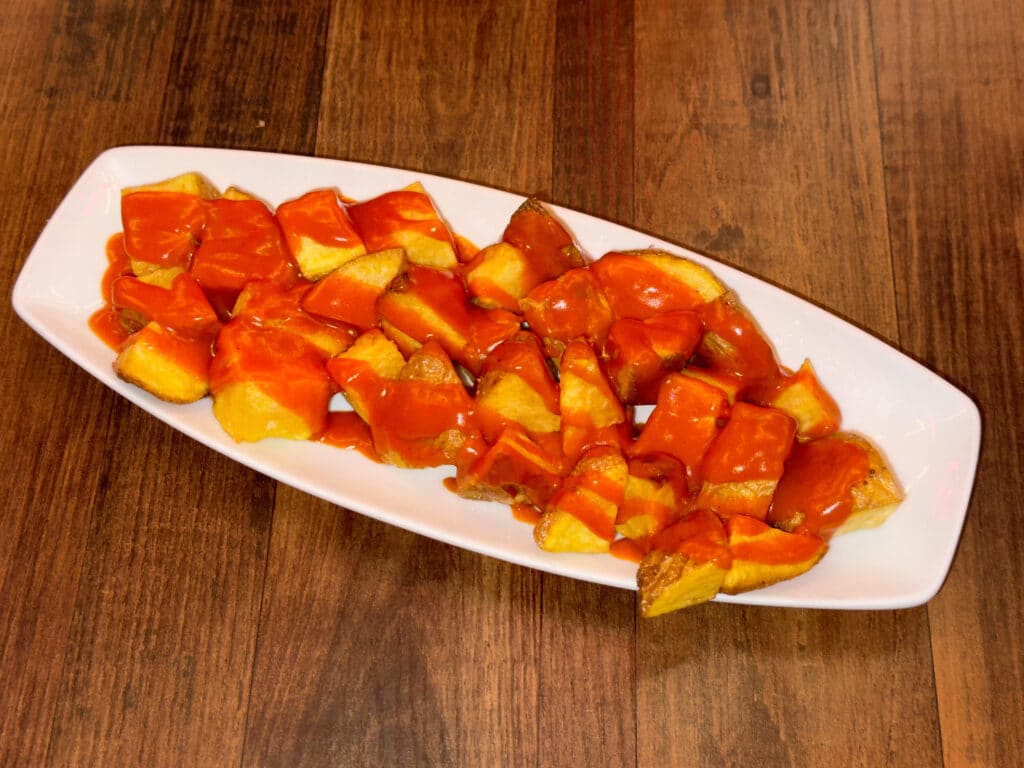
I don’t think that patatas bravas need much of an introduction, but here is another iconic dish, and one that originates from Madrid!🇪🇸
Patatas bravas are cube-cut, fried potatoes that are served with a spicy sauce called “Salsa Brava”, and occasionally aioli too. Salsa brava is a spicy tomato-based sauce that includes lots of paprika.
Because this dish was born in Madrid, and became especially famous in the 1960s, the patatas bravas are a must-try food.
This dish is traditionally enjoyed as a tapa in bars.
If you’re celiac, it’s important to note that patatas bravas are not always gluten free – this could be due to how they are fried or the bravas sauce.
The best place to enjoy gluten free patatas bravas is the restaurant LaLina which essentially a 100% gluten free tapas bar famous for their patatas bravas. This restaurant is in the La Latina neighborhood, right in the city center.
Croquetas
If there was one food that everyone in Spain truly loves it would be croquetas, “croquettes”.
Unlike French croquettes, which often use mashed potatoes, Spanish croquetas are made with a creamy béchamel base and can include different ingredients. The most typical is the Croqueta de Jamón, which contains a bechamel filling with jamón.
Having grown up in Italy, I still cannot picture croquettes being made with anything else other than potatoes – or rice, but that would be my beloved Supplí and Arancini.😂
I say this because for me croquetas, specifically their bechamel base, are something I am still getting used to flavor-wise.
If you’re celiac, one place to visit is Solo de Croquetas, which is a 100% gluten free spot that only makes croquetas! This is located right in the city center.
Gambas al Ajillo
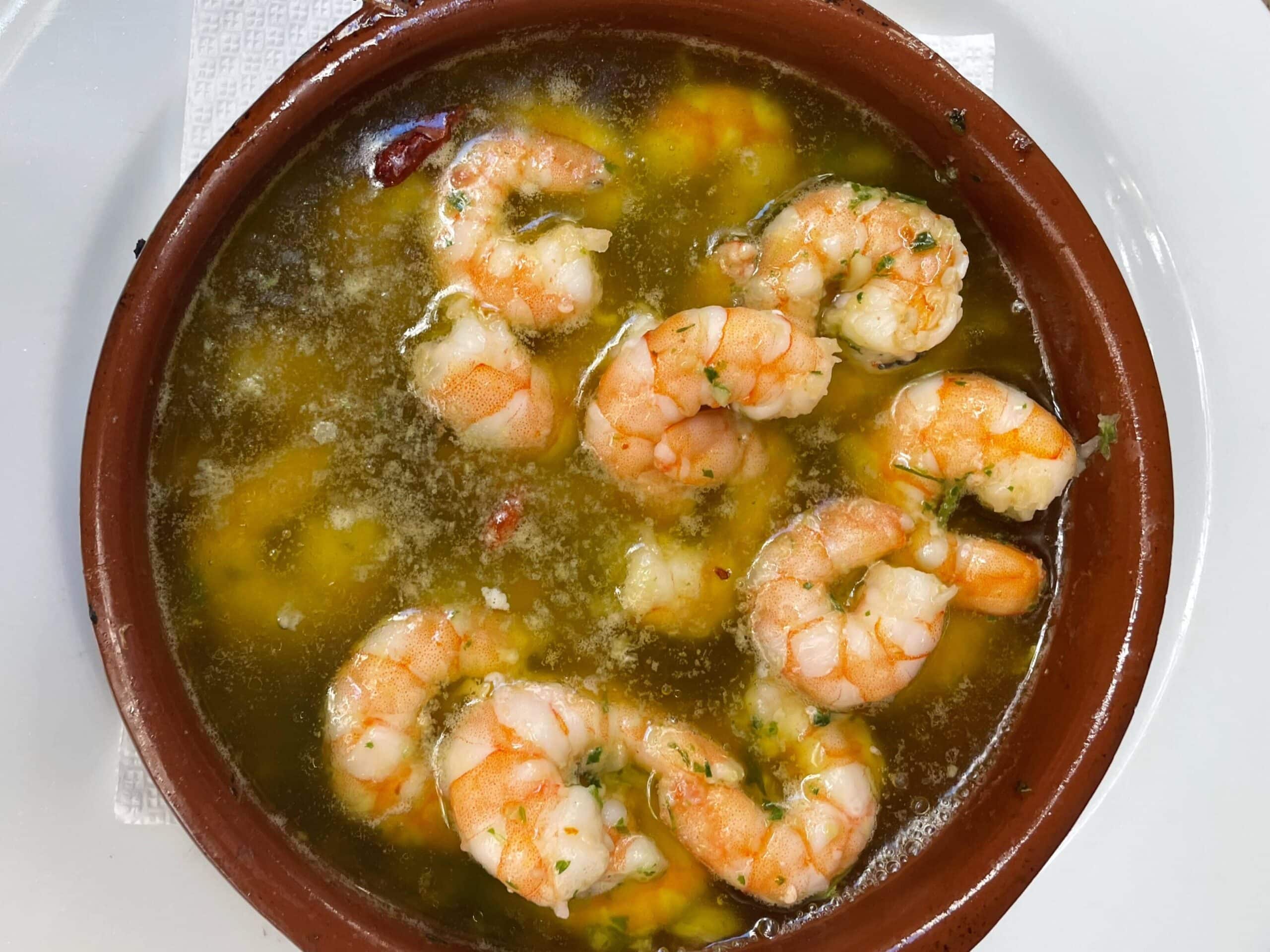
Also known as “Gambas al Pil Pil”, gambas al ajillo is a traditional tapa or appetizer where you have delicious shrimps served in hot olive oil, with also garlic, chili, and paprika.
Gambas al ajillo means “Gambas with Garlic”, so be ready for a delicious and very flavorful dish!
This dish was born in Madrid and is an iconic tapa to the city, making it a must-try!
Caracoles a la Madrileña
Both in Madrid and in Andalusia, locals LOVE caracoles, “snails”. I have yet to try them, and making it my goal for the new year!😅
The caracoles a la madrileña are very different from France’s traditional escargot. Their differences lie in the size of the snails, the Spanish ones are much smaller, and their preparation and how they are served.
The Madrid snails are often served in a plate full of flavorful broth that includes tomato, paprika, onion, pieces of chorizo and jamón, and other spices.
This dish is quite seasonal and the spring time is the time to enjoy lots of caracoles!🐌
Gluten free note: some places might add flour to the snails or in the broth to thicken it. Always ask if it’s gluten free or not!
Jamón
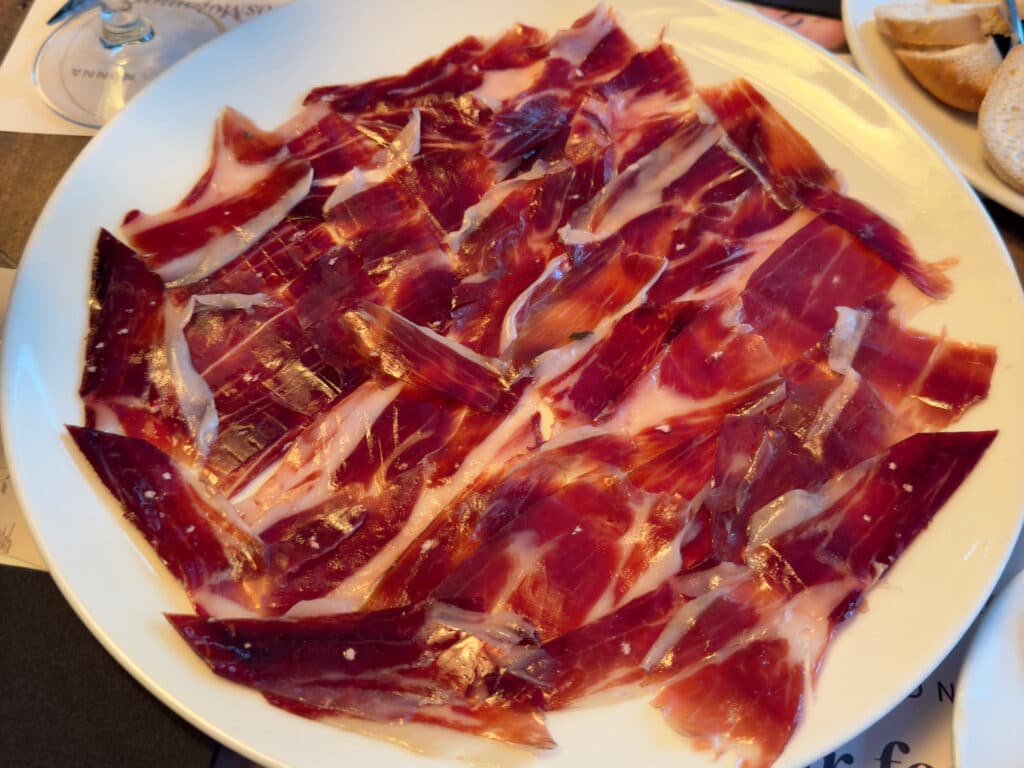
Say hello to the icon of Spanish cuisine: jamón.😍
As a quick cultural and gastronomic lesson, there are three different types of jamón:
- • Jamón Ibérico — from the Iberian pig; the highest quality depends on diet (acorn‑fed is best), and it’s cured 24–48 months.
• Jamón Serrano — from white pigs with a shorter curing period (about 9–24 months).
• Jamón York — the Spanish term for regular cooked ham.
At the famous question of “jamón Ibérico vs. prosciutto,” as an Italian who grew up on prosciutto, I’ll say this: they aren’t directly comparable because the animal, diet, and curing processes are entirely different.
But if you must have an answer, jamón ibérico wins for richness and complexity. Prosciutto is delicious in its own right — it’s saltier and not as bold in flavor, which some people might prefer!
Tarta de Queso
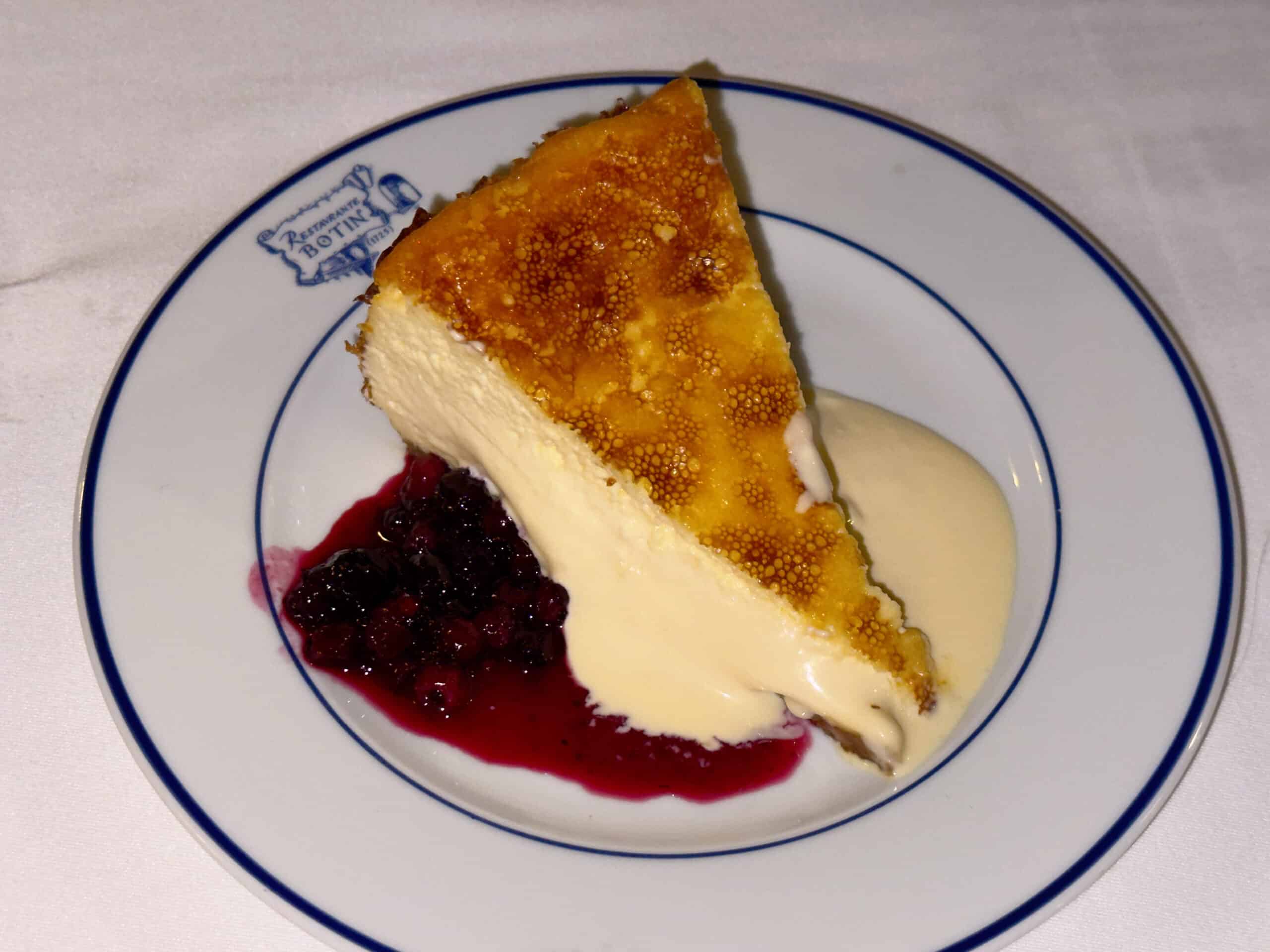
Once you go Basque (Cheesecake), you never go back!🤪
Okay, technically the cheesecake above is not a traditional Basque cheesecake, but it felt like a fun play on words – and a true one.
Whether it’s a traditional basque cheesecake or not, you can expect that most, if not all, cheesecakes in Madrid have a gooey, almost melted, center.
The difference between a Basque and New York cheesecakes is that the Basque cheesecake has no crust, is more airy and usually has a burnt or caramelized top from how it’s cooked. It is also more balanced with its ingredients, while the New York cheesecake focuses mainly on the cream cheese.
Madrid Food Tour
Want to enjoy a true tapas experience with a local? Then this best-rated, local-led Tapas Tour could be perfect for you!😍
During this 3 hour long tour, the local guide brings you around Madrid’s historic center to four historic bars, including some century-old ones. The local guide will also teach you about the origins of local dishes, the tapas culture, and more.
This tour is perfect if you want to dive deeper into the local tapas culture, visit great bars, and enjoy 12 different tapas!
This tour often sells out – book your Madrid Tapas & Wine Tasting Tour before its too late!👇
Madrid Cooking Class
One of the best souvenirs you can get yourself is learning a new recipe from the destination you’re in!
By learning a local recipe, you’re automatically diving deeper into the culture and gastronomy. Furthermore, it’s a perfect souvenir because it allows you to “travel” back every time you cook the recipe at home.
For example, if you learn how to make a proper paella in Madrid, you’ll be able to make this dish yourself when you’re back home – any time you’re craving it or missing Madrid’s paella.🥘
If you love paella and want to learn how to cook it, while enjoying unlimited sangria – this best-rated cooking class could be perfect for you!👇
It’s a 3 hour class during which you learn how to make authentic paella and sangria. This class is led by a local and it doesn’t require any previous cooking experience. Once you’re done cooking, you’ll get to enjoy your paella and sangria, and bring the recipe home.
What to Eat in Madrid FAQs
What is the main meal of the day in Madrid?
The main meal of the day in Madrid is lunch! This is the biggest meal of the day and also the one that people take more time to enjoy.
What’s the tipping etiquette in Madrid?
In Madrid, as in all of Spain, tipping is not anything expected or as big as it is in countries like the U.S. or England. A tip in Madrid is given if you’re happy with the service, and/or if you want to round up your bill.
Often times a tip is a euro or two.
What are some must-try tapas in Madrid?
Some must-try tapas in Madrid are patatas bravas, gambas al ajillo, and tortilla española.
Want more help with your Madrid travels? Check out my other Posts!
- How to Spend Three Days in Madrid | The Perfect Itinerary
- The Ultimate One Day in Madrid Itinerary
- 15+ Best Things to Do in Madrid
- How to Spend the Perfect Sunday in Madrid, Spain
- Where to Stay in Madrid: The Best Neighborhoods for Tourists
- The Ultimate Guide to the Hidden Gems in Madrid
- Madrid Sin Gluten: Best Gluten Free Restaurants in Madrid
- Museo Del Prado Tips & Things To Know Before Visiting
- 21 Best Places to Visit in Spain in 2025
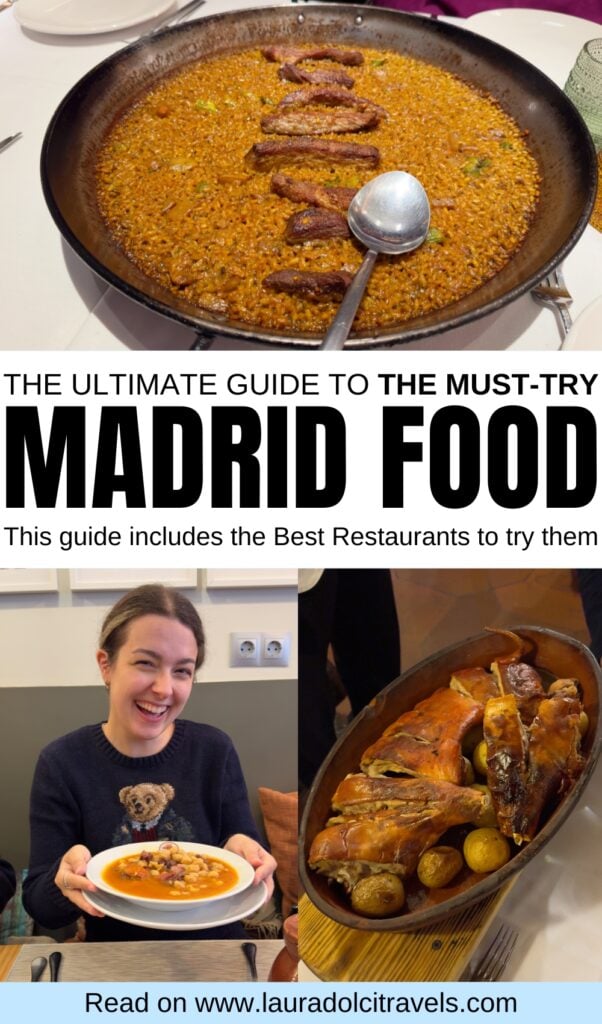
📌 Pin this for your future Spain Travels!🇪🇸
I have to ask…
Which of these foods are you most excited to try? Let me know in the comments!☺️👇
Share this with family & friends who are planning to attend and would find this helpful.🤩
Follow me on YouTube for my travel vlogs and other worldwide adventures, or on Instagram!🗺️