Perfect 2 Days in Rome Itinerary: How to See the Best of Rome in Just 2 Days
Planning a 2-day trip to Rome? I couldn’t be more excited for you – and you’re in the right place! As someone who basically grew up in the Eternal City, I’ve spent the past 25+ years discovering its most iconic landmarks, hidden gems, and local favorites.
This 2-day Rome itinerary combines all the must-sees with secret spots that many tourists miss, helping you make the absolute most of your time.
Knowing this city like the back of my hand, I’ve prepared this step-by-step itinerary to help you smoothly navigate this enormous city – all while sharing local insights and tips.
Without further ado, get ready to experience the best of Rome with this ultimate itinerary! 😍👇
Disclaimer: This post has affiliate links that can help me earn a small commission, at no extra cost to you. If you click through and purchase with these links, thank you in advance for the extra support.💖😊
The Ultimate 48 Hours in Rome Itinerary
Don’t have time to read yet? Grab my Quick Recommendations! 👇
🔥 Book ASAP: #1 Colosseum Tour & Skip-the-line Vatican Tour
🏡 Stay at Piazza di Spagna 9 or H10 Palazzo Galla
🗺️ Protect yourself with Travel Medical Insurance.
📱Always stay connected with an Italy eSim! 📱
🧳 Use Bounce (my favorite) for safe & convenient luggage storage
Day 1: Ancient Rome Itinerary – Colosseum, Roman Forum, and Local Gems
On this first day, I’m bringing you to all the iconic and historic landmarks of Ancient Rome, along with historic hidden gems that only locals know.
Get your comfy shoes and your fully charged phone, or camera, ready… Let’s go! 👇
Visit the Colosseum
- 📍 Location: Piazza del Colosseo, 1
- 💰 Price: Depends on the ticket you purchase. The regular entrance is 18 euros.
- 🗺 Tips: Buy tickets in advance!

What better way to start your adventures in Rome than by visiting the one and only Colosseum? As one of the 7 Wonders of the World and the world’s largest standing amphitheater, entering this landmark is simply a must.
I highly recommend visiting the Colosseum early in the morning to avoid Rome’s extreme heat, avoid crowds, and have more energy.
If you are an early bird who wants the most unique experience, you can get VIP entrance as early as 7:15 AM and have the Colosseum to yourself, along with a small group of 7 people.
Looking for a guided tour at a more regular time? Grab tickets for the #1 selling, skip-the-line guided tour before it sells out! 👇
Visited the Colosseum already? If you have, it’s still worth starting the day here and admiring the wonder from outside. Once you’ve visited—or even just said hi to—the Colosseum, head to the Roman Forum. 😍
Roman Forum
- 📍 Location: Via della Salara Vecchia, 5/6
- 💰 Price: Included in ticket with Colosseum.
- 🗺 Tips: Visit this street for the best views looking over the Roman Forum.

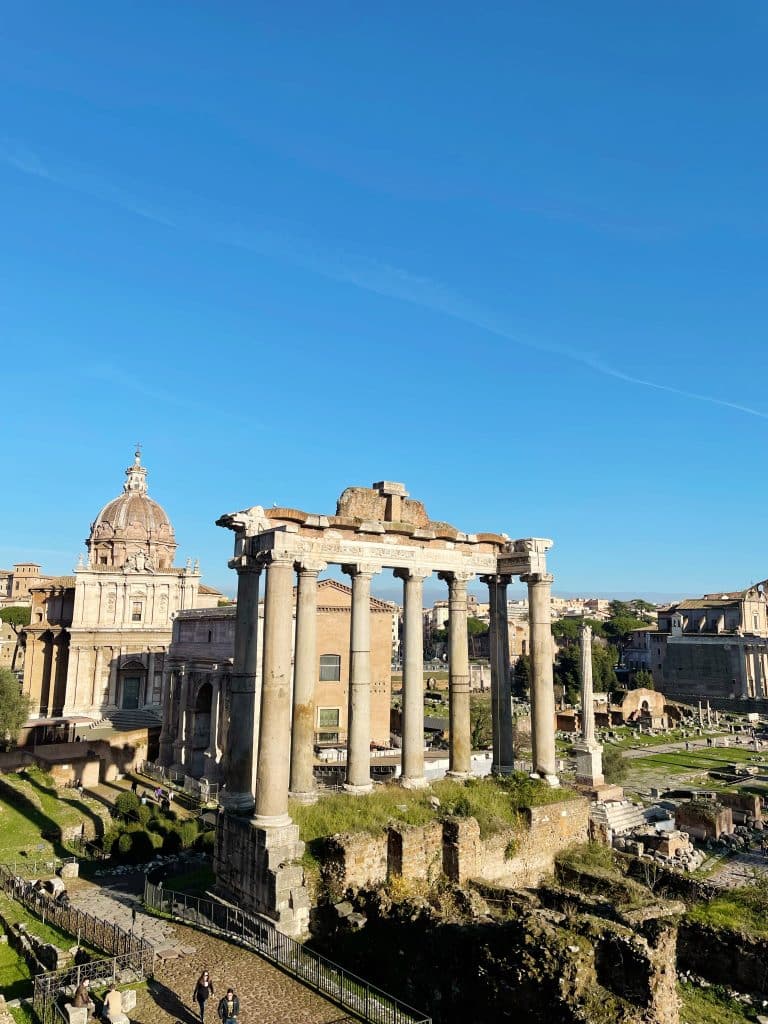
Whether you got your Colosseum tickets or tour with the Roman Forums included or not, after your visit, head to Via di Monte Tarpeo for the most beautiful views overlooking the Roman Forum.
This site features ancient Roman ruins that once served as important centers for religious, social, and political activities. Some important sites here are the Senate House, the Temple of Saturn (pictured above), and the Arch of Titus.
To share some interesting history, the Temple of Saturn originally dates back to 498 B.C. and was used as a treasury. This temple was rebuilt over time, so the ancient ruins you see today date back to 42 B.C.
Piazza Campidoglio (Capitoline Hill)

After you admire the beautiful Roman Forum from Via di Monte Tarpeo, the stunning Piazza Campidoglio will be right around the corner from you.
Sitting at the top of Capitoline Hill, Piazza Campidoglio was designed by none other than Michelangelo, in the 16th century.
Surrounding this square are three important buildings: Palazzo Senatorio, the Palazzo dei Conservatori, and Palazzo Nuovo.
When walking in the Campidoglio square, you will notice that the pavement has an off-white circular design with a statue in the middle, sitting on top of a star-like sign. This design of Michelangelo is the Umbilicus Urbis, the “Navel of the City of Rome.”
Optional Hidden Gem | Santa Maria in Aracoeli
- 📍 Location: Scala dell’Arce Capitolina, 12. Right next to the Altar of the Fatherland.
- 💰 Price: FREE

Once you walk down the stairs that bring you to Piazza Campidoglio, there will be another set of stairs, specifically a 124-step marble staircase that brings you to the “highest peak of Capitol Hill” and one of my favorite places in Rome.
At the very top is Santa Maria in Aracoeli, one of Rome’s beautiful hidden gems that dates back to the 6th century and one of my favorite spots.
This is optional, but highly recommended as it is an absolute work of art!
Not only is the hidden gem stunning, but at the top of the stairs, you’ll find beautiful views overlooking Rome, including the dome of St. Peter’s Basilica.
The first time I “dared” to climb the staircase was in 2023, and honestly I could not believe I had gone all my life without visiting this beautiful basilica.
Visit the Altare della Patria
- 📍 Location: Piazza Venezia (Near Roman Forums)
- 💰 Price: FREE
- 🗺 Tips: Walk all the way up to the top for some beautiful views of Ancient Rome.

Welcome to Rome’s “wedding cake”, or “typewriter”!
Dating back to 1885, the Altare della Patria, “Altar of the Fatherland”, is an iconic monument dedicated to Vittorio Emanuele II, the first king of unified Italy.
This monument is jokingly known as the “wedding cake” because of its newness and pearly-white color, in contrast to the ancient Roman buildings that surround it.
The Altar of the Fatherland is free to enter, and the views you get from above are absolutely worth the stairs!
If you aren’t physically able to take the stairs or are with someone who can’t, there is an elevator available.
Largo di Torre Argentina & Cat Sanctuary
- 📍 Location: Scavi Archeologici, Largo di Torre Argentina Angolo, Largo Arenula, 00186 Roma RM, Italy
- 💰 Price: FREE
Largo di Torre Argentina is home to the remains of four of Rome’s oldest temples.
These four temples were built in honor of different deities: the Goddess of Fountains, the Goddess Fortuna, the Goddess of Fertility, and Lares Permarini.
In addition to the temples, there are the remains of the Theatre and Curia of Pompey, where Julius Caesar was assassinated.
Now, these ancient ruins are home to a loving cat sanctuary. Walk by here to see the ruins and its sweet and beautiful, furry citizens!
Visit the Jewish Quarter
A short walk from the Largo di Torre is one of Rome’s best-hidden gems and beautiful neighborhoods, the Jewish Quarter.
Established in 1555 by Pope Paul IV, this is one of the world’s oldest ghettos. Up until 1870, Jews were confined to this area and were required to wear a visible sign identifying them.
Over the decades, the Roman Jewish community has continued to grow and thrive, turning the Ghetto into an incredibly beautiful, bustling, and vibrant neighborhood.
This quarter is known to have some delicious restaurants and bakeries, making it a must-visit when traveling through Rome. Two of the most beloved foods in Rome (must-tries) are Carciofi alla Giuda and Fiori di Zucca, both from the Roman Jewish community.
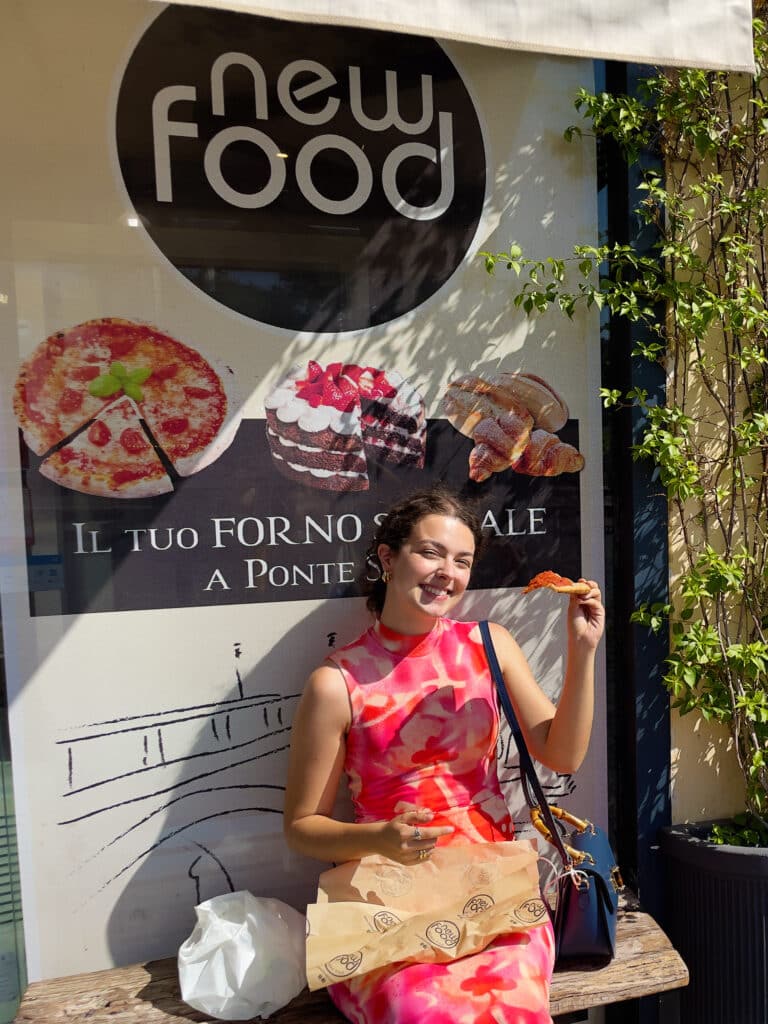
To learn more about the Roman Jewish Quarter, you can take a walking tour that will guide you through the neighborhood and its history.This quarter can certainly be a nice spot for lunch. However, if you’re celiac, I highly recommend heading to the nearby New Food Gluten Free for a roman street-food lunch. 😋
Isola Tiberina – Tiber Island
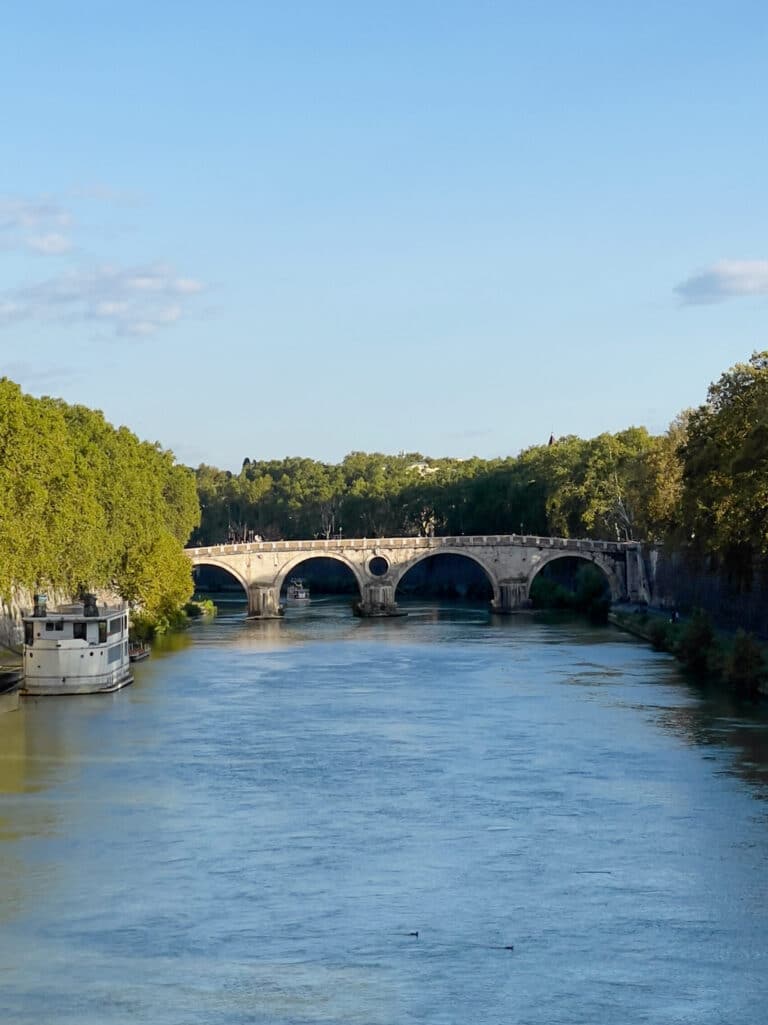
As you make your way towards Rome’s Rose Garden, take a quick detour to the historic and charming Tiber Island.
Isola Tiberina is the only island in the Tiber River and is likely the smallest inhabited island in the world.
The history of this island dates back to ancient Roman times, with various legends hypothesizing how this island came to exist. For example, there is a legend that explains why the island is shaped like a ship.
The Legend: a Roman ship went to Greece to ask the god of healing for help with the plague epidemic. During the ritual, a snake (symbol of the god of healing) went on the ship to hide and join the sailors on their journey back to Rome.
Later in the journey, the snake swam to Tiber Island and disappeared, indicating its new home. In honor of that and the plague ending, the Romans shaped the island into a ship and populated it with marble, an obelisk, and temples.
In addition to its many curious and ancient legends, this island is also home to a historically important hospital from the 16th century – the Fatebenefratelli “DoWellBrothers” hospital. During the Second World War, two doctors invented a disease, “K disease,” to protect Jews.
Long story short, Tiber Island may be small, but its history and historical importance most definitely aren’t. Come to this island to appreciate more of ancient Rome and enjoy beautiful views.
Bocca della Veritá
- 📍 Location: Piazza della Bocca della Verità
- 💰 Price: FREE
Ah, the iconic Mouth of Truth! The Bocca della Veritá is an ancient, large marble mask dating back to the 1st century CE.
Its name indicates its medieval origins (the year 1495), with a legend stating that if you are a liar, your hand will be slit or cut off. In other words, this is one of the world’s first lie detectors! 😂
This is a free activity, meaning you may find some longer lines here depending on the day or time of day. If there’s a long line, you can always peep through the gate and see it up close.
Giardino degli Aranci and Roseto Comunale
- 📍 Location: Piazza Pietro D’Illiria, 00153 Roma RM, Italy
- 💰 Price: FREE
Giardino degli Aranci is the perfect spot to stroll around and take a small break from the city. In this park, you will find a terrace overlooking Rome, offering some of the most beautiful panoramic views.
If you are visiting Rome in the spring or autumn, make sure to detour toward the Roseto Comunale, the Rose Garden, which sits just a short walk from the Giardino degli Aranci.
The rose garden is home to over 1,100 types of roses from around the world – including China and Mongolia.
Knights of Malta Keyhole (Hidden Gem)
- 📍 Location: Piazza dei Cavalieri di Malta, 3, 00153 Roma RM, Italy
- 💰 Price: FREE

What if I told you that you could see St. Peter’s Basilica perfectly framed… through a keyhole? 👀
Just a short stroll from the Giardino degli Aranci (Orange Garden) lies one of Rome’s most whimsical and lesser-known treasures: the Knights of Malta Keyhole.
Tucked into the green door of the Priory of the Knights of Malta on the Aventine Hill.
Circo Massimo
- 📍 Location: Via del Circo Massimo, 00186 Roma RM, Italy
- 💰 Price: FREE
Once the largest stadium in ancient Rome, Circo Massimo, “Circus Maximus”, was where the thrill of chariot races and sports captivated up to 250,000 spectators. Today, it’s a large green space found between the Palatine and Aventine hills — a peaceful contrast to its past.
As is the case with most historic sites in Rome, it’s quite the mind game to realize you’re walking where Romans once gathered for races, competitions, and celebrations. Today, you’ll find locals jogging, walking their dogs, soaking in the sun, or enjoying a picnic with a view.
This is one of the best open-air spots to relax mid-itinerary while still surrounded by ancient grandeur. If you’re lucky, you might even catch a cultural event or concert — the Circo Massimo occasionally comes back to life as a modern venue.
Trastevere
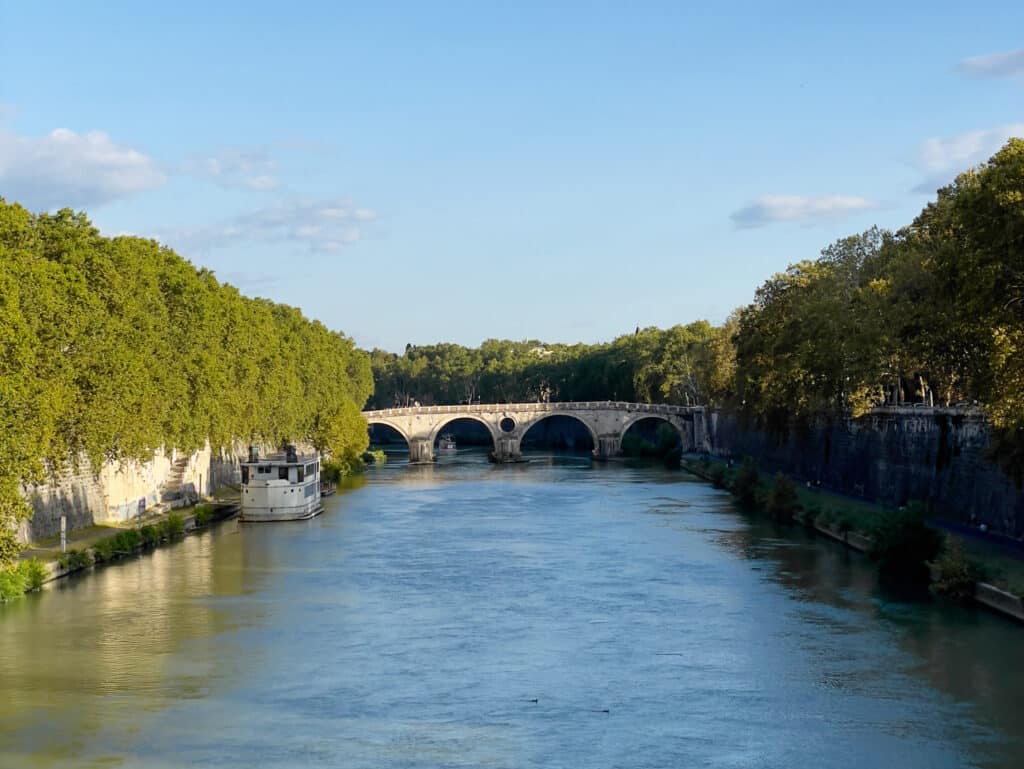
Sitting on the west bank of the Tiber River is one of Rome’s most charming and vibrant neighborhoods.
With its peaceful, boho atmosphere, Trastevere is beloved by both tourists and locals alike. From its cobbled stone streets to its yellow and orange buildings to its aesthetic lighting, the beauty is never-ending.
End your first day on a perfect note by visiting this neighborhood for a nice stroll and dinner!
One of the best rated restaurants according to locals is Peppo al Cosimato, which is a restaurant that specializes in wood-fired pizza and traditional seafood recipes.
If you’re celiac, a safe gluten-free restaurant in Trastevere is Mama Eat Roma, where you can enjoy everything from gluten free pizza and pasta to street food.
Day 2: Explore the Vatican and Rome’s City Center
On your second day in Rome, I’m taking you through the artistic and religious heart of the city—from the Vatican City to Castel Sant’Angelo—along with more hidden gems and lively local spots around Campo de’ Fiori.
Castel Sant’Angelo
- 📍 Location: Lungotevere Castello, 50, 00193 Roma RM, Italy
- 💰 Price: Regular Entry ticket is 15 euros.
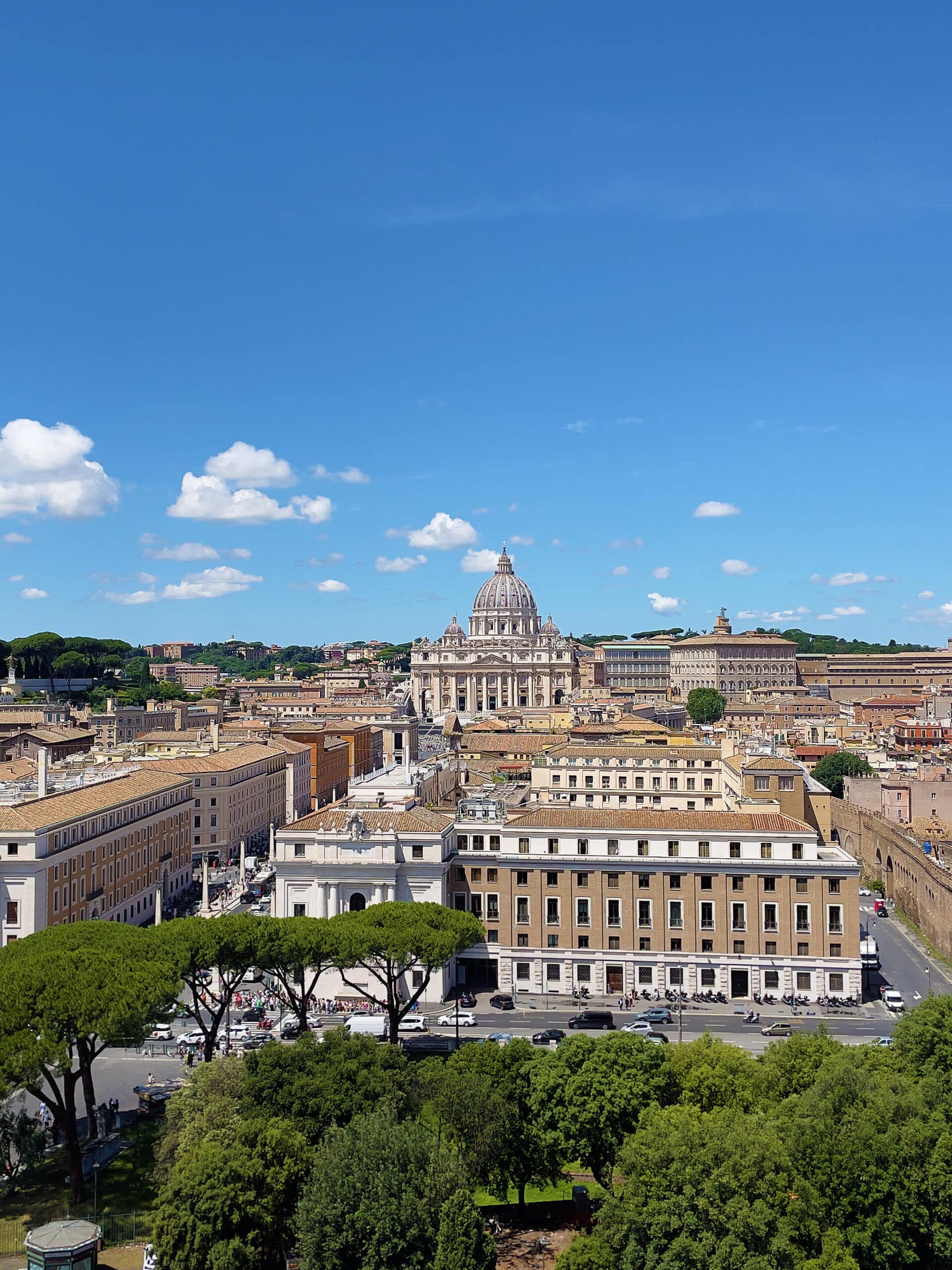
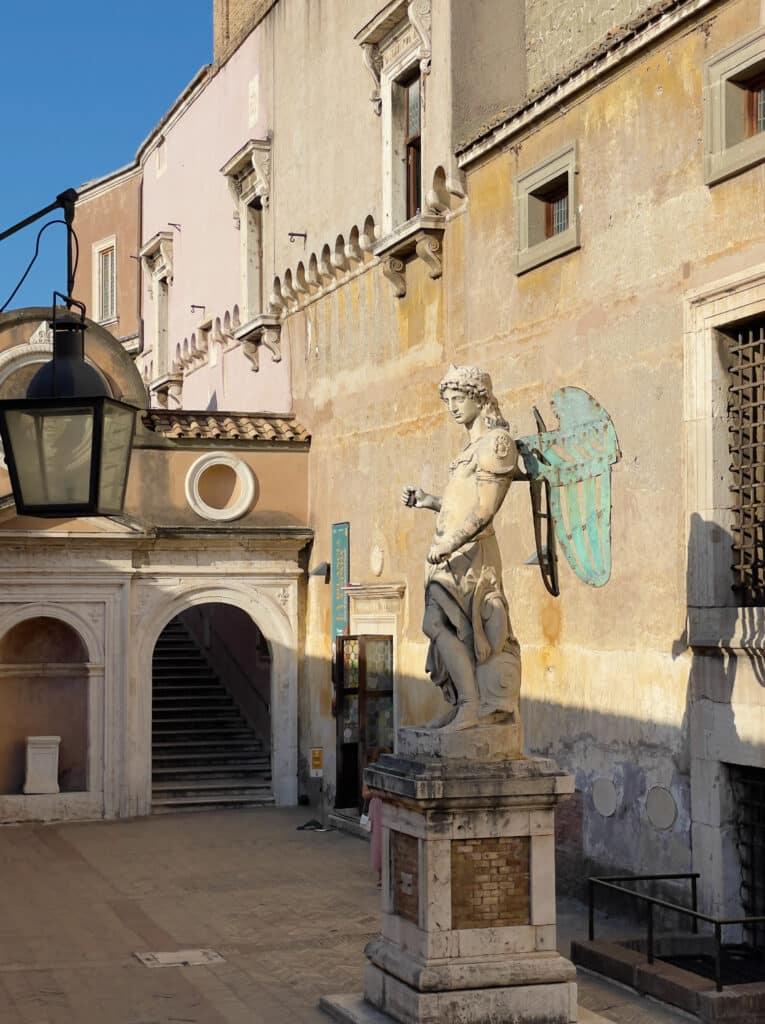
Now this is the best way to start your second day in Rome!
Castel Sant’Angelo is a hidden gem and a 2nd-century AD fortress. Throughout the centuries, this fortress has played different roles and went through various renovations.
At one point, this landmark was a papal residence, during which a narrow bridge was constructed to connect it to the Vatican, allowing for easy navigation for the Popes.
The best part of Castel Sant’Angelo is the absolutely MESMERIZING views over Rome from both the coffee shop level and the rooftop.
With these views and a nice cappuccino, this visit is the perfect prep for another day full of adventures in the Eternal City.
Book your tickets here before they sell out!
Vatican City
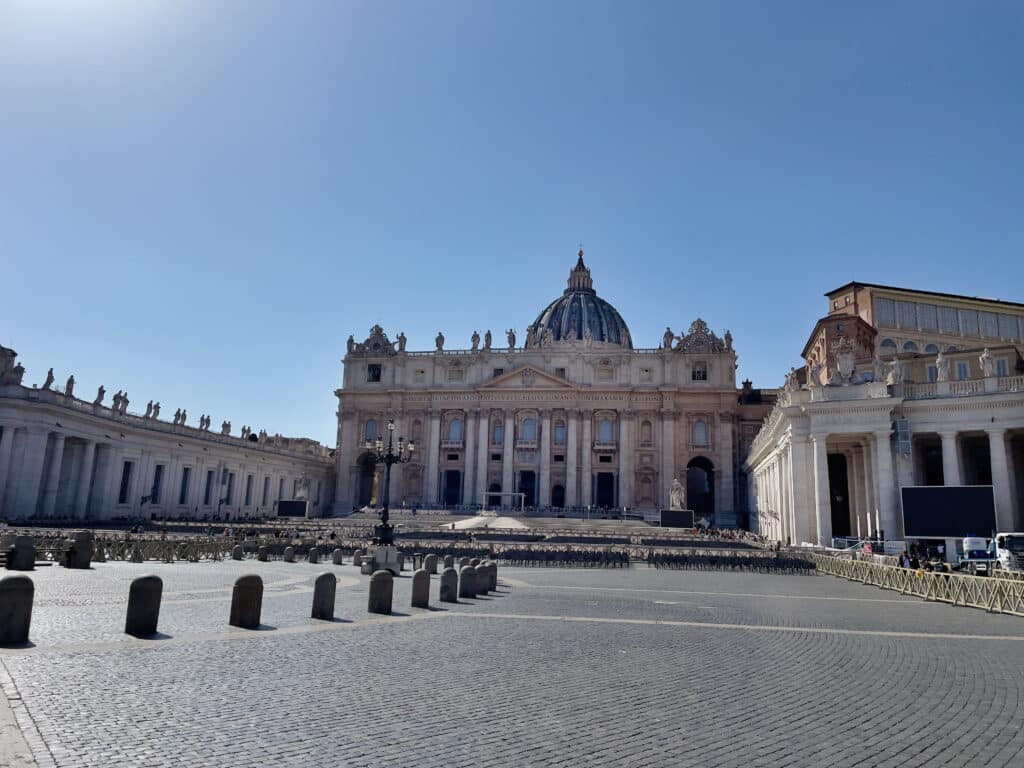
After visiting the Castel Sant’Angelo and enjoying a cappuccino with jaw-dropping views of Rome, it’s time to switch countries! 😉
Welcome to Vatican City—the world’s smallest country and home to one of the most iconic religious landmarks on the planet.
If you’re planning to visit the Vatican Museums and Sistine Chapel, be sure to book skip-the-line tickets and head there first thing in the morning (which means flipping this visit with the Castel Sant’Angelo itinerary around). There’s no entry cap, so by mid-morning it can feel like you’re swimming through a sea of tour groups.
Here’s my honest take: you don’t have to go inside to enjoy the Vatican’s grandeur. If squeezing through packed galleries isn’t your thing and you want to make the most of your two days in Rome, there are equally stunning alternatives that are far less chaotic.
Vatican Museum & Sistine Alternative: Galleria Borghese.
The Borghese Gallery is one of the world’s top art museums, home to masterpieces from the 15th to 18th centuries. Expect breathtaking works by Bernini, Botticelli, Raphael, and Caravaggio—without the shoulder-to-shoulder crowds.
St. Peter’s Basilica Alternative: Basilica San Paolo Fuori le Mura.
Just a short metro ride from the center, St. Paul Outside the Walls is one of Rome’s four papal basilicas and the second largest after St. Peter’s. The coolest part? Being a hidden gem, it rarely draws crowds. It’s massive, majestic, and packed with history—without the chaos.
And here’s a cool (but slightly dark) fact: the basilica’s interior is lined with portraits of every pope in history. Legend has it that once all the portrait spots are filled, the world will end. 😅
Villa Borghese Gardens & Galleria Borghese
- 📍 Location: 00197 Rome, Metropolitan City of Rome Capital, Italy
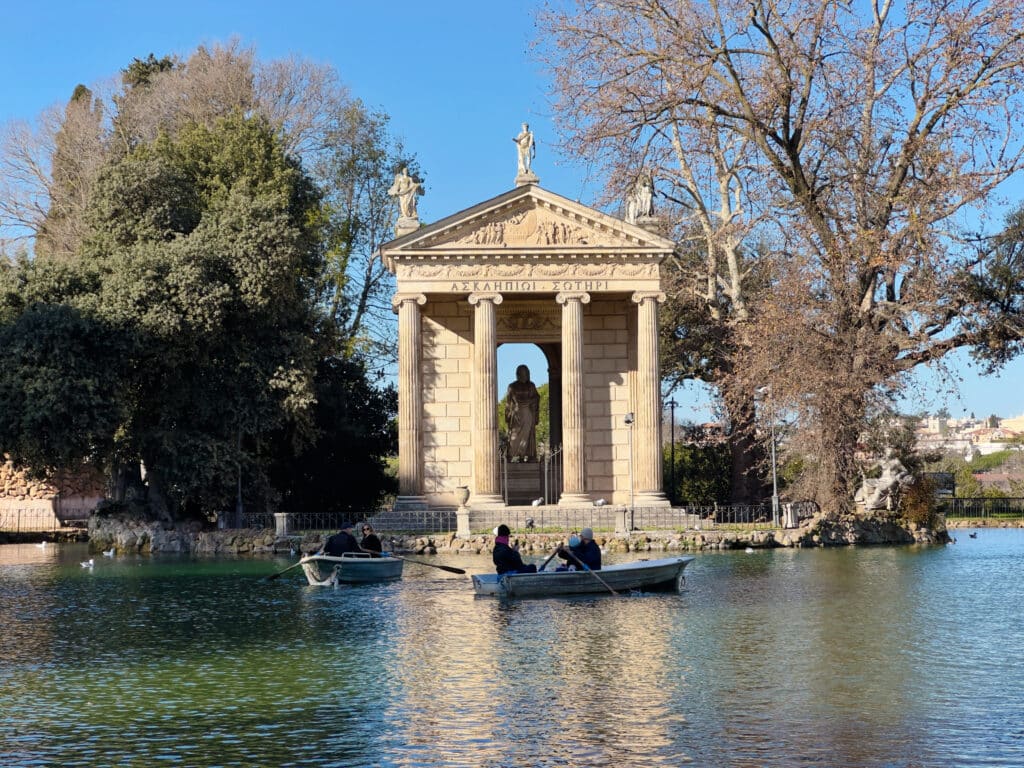
After the Vatican, head to the Villa Borghese gardens to enjoy this magnificent oasis.
While walking through these gardens, you will see lush greenery, picturesque pathways, and serene lakes.
In addition, you will find beautiful sculptures and fountains, including some Bernini work. At these gardens, you can take peaceful strolls, go on bike rides, or even rent a rowboat!
After you soak in the beauties of the garden, head to the Galleria Borghese. The Borghese Gallery, as previously mentioned, is a great alternative to the Vatican Museums.
With an impressive collection of works from the 15th-18th centuries, including pieces by Botticelli, it’s no surprise this is one of the world’s most renowned art museums.
While the gardens are free to enter, the Borghese Gallery is not. You will definitely need to book your tickets, either for entry or for a guided tour, in advance.
Piazza di Spagna | Spanish Steps
- 📍 Location: Piazza di Spagna, 00187 Roma RM, Italy

As you make your way deeper into the city center, stroll through the elegant Piazza di Spagna, home to the iconic Spanish Steps — one of Rome’s most beloved landmarks.
This 18th-century staircase connects the piazza below with the Trinità dei Monti church above and is a favorite spot for locals and visitors alike to walk around, maybe do some people-watching, and soak in the bustling atmosphere.
Take your time ascending or descending the 135 steps, pausing to admire the view and the lively ambiance. Only thing, do NOT sit on the Spanish Steps, or you will get yelled at!
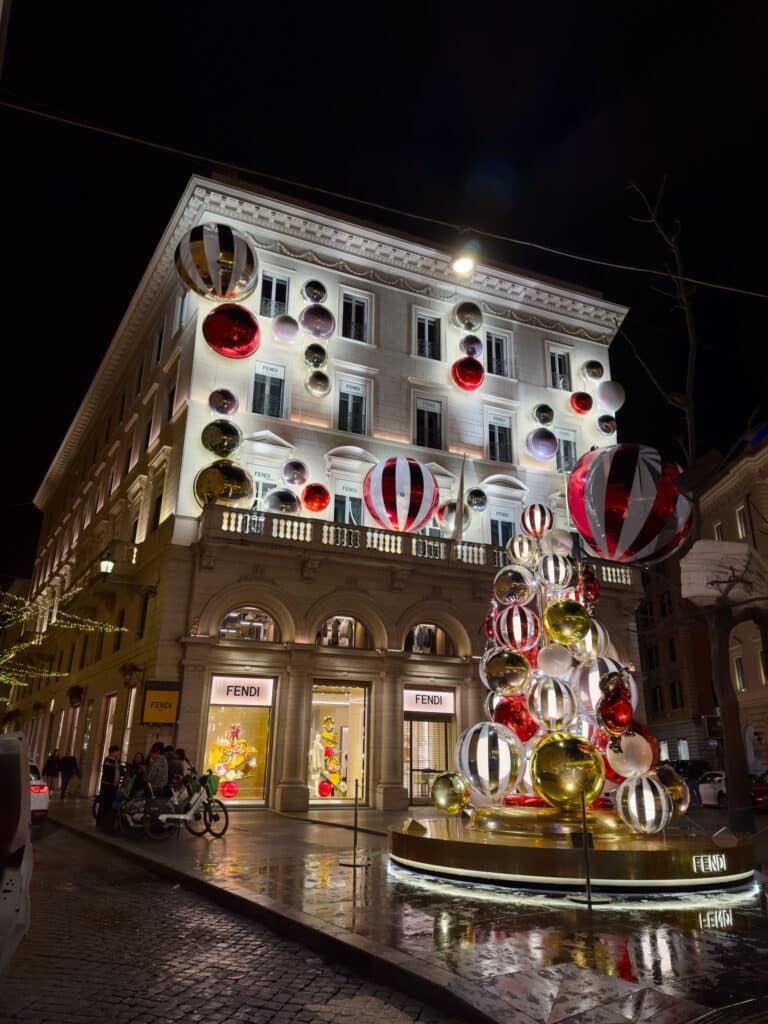
Just beside the Spanish Steps is Via dei Condotti, Rome’s answer to Fifth Avenue — a haven for fashion lovers and design aficionados. Take the scenic route down this glamorous street on your way to the Trevi Fountain.
Even if you’re not shopping, it’s worth a stroll just to marvel at the window displays – because, let me tell you, the visual merchandising in Rome is the best! 😍
Being a place where high-end fashion meets historic buildings and cobblestone charm, this stretch of your walk will feel like a movie scene.
Lunch at the Trevi Fountain
- 📍 Location: Piazza di Trevi, 00187 Roma RM, Italy
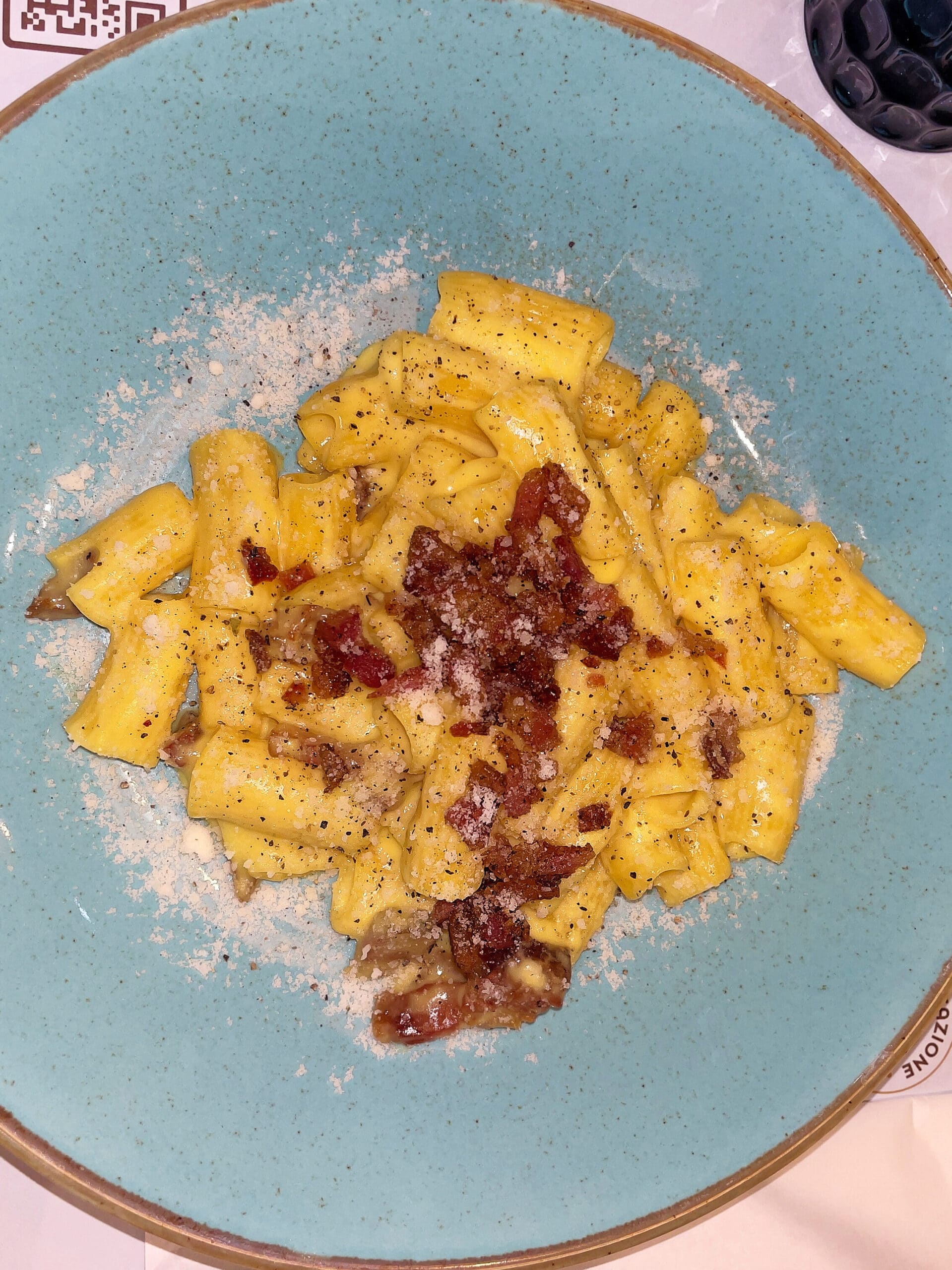
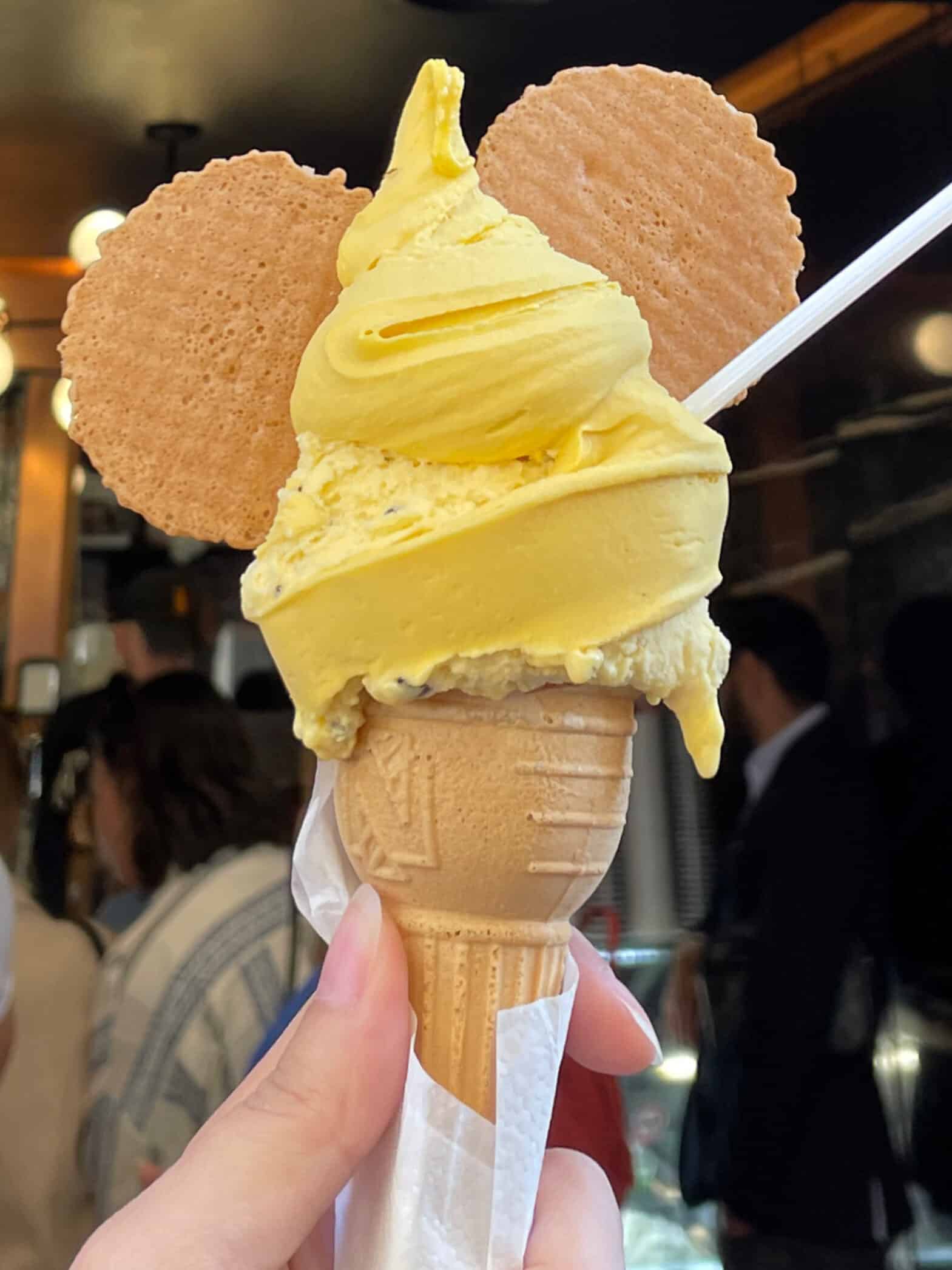
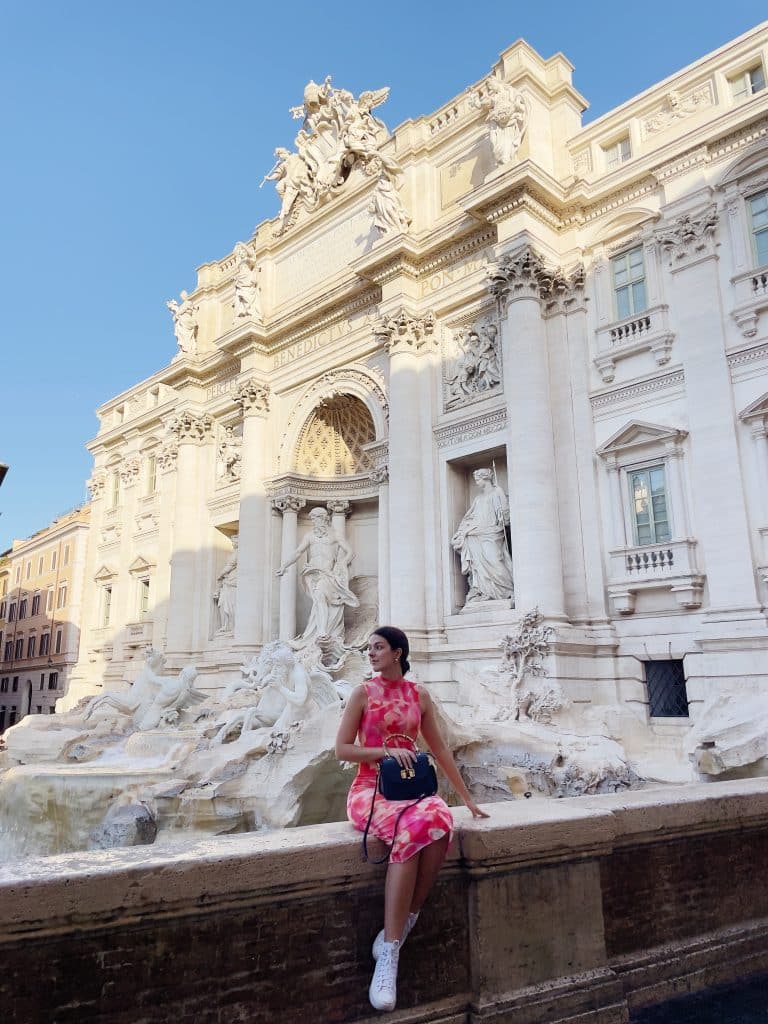
After such a long morning of adventures, fuel up by having lunch at Pizza in Trevi, one of the best gluten-free restaurants in Rome. This restaurant has two kitchens: one is regular, and the other is AIC-certified and safe for people with celiac disease.
The restaurant is right next to the Trevi Fountain and surprisingly is NOT a tourist trap. Once you are done having a delicious lunch, head to Gelato G Italiano for a delicious,cold dessert. Gelato G Italiano is a 100% gluten-free gelateria and is one of the best gelaterias near the Trevi Fountain. Grab your gelato (I highly recommend their Passion Fruit & Mango) and enjoy it with the views of the Trevi Fountain. 😍
😋 Discover all the Best Gluten Free Restaurants in Rome!
Galleria Sciarra (Hidden Gem)
- 📍 Location: Via Marco Minghetti, 10, 00187 Roma RM, Italy.
- 💰 Price: FREE

Galleria Sciarra is a mesmerizing 19th-century courtyard decorated in beautiful frescoes and sun rays that pierce through its glass ceiling.
This courtyard, commissioned by the influential Sciarra family, was originally designed to be a mall. While it never became one, Galleria Sciarra remains a beautiful, hidden gem to admire and walk through.
Pantheon
- 📍 Location: Piazza della Rotonda, 00186 Roma RM, Italy
- 💰 Price: FREE

Now it’s time to visit one of ancient Rome’s best-preserved monuments!
The Pantheon dates back to 25 B.C. and is thought to have been designed as a temple for the Roman Gods.Book your skip-the-line tickets to the Pantheon before they sell out! 👇
Casa del Caffè Tazza D’Oro
- 📍 Location: Via degli Orfani, 84, 00186 Roma RM, Italy
A few steps away from the Pantheon is the holy grail of coffee, the Casa del Caffè Tazza D’Oro.
This coffee shop is perfect for a delicious pick-me-up. Their signature drink, Granita al Caffè con Panna, is a drink made with finely crushed ice showered in strong coffee and layered with fresh, homemade whipped cream.
Piazza Navona
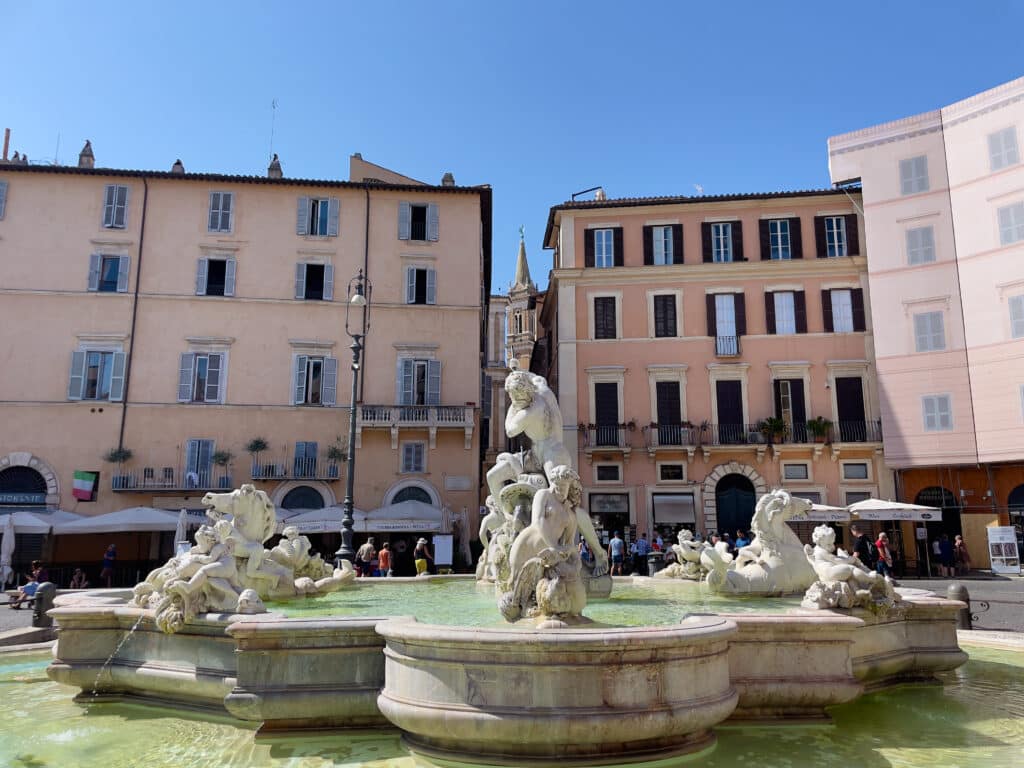
After the Pantheon, it’s time to head to one of the most beautiful and iconic squares of Rome — Piazza Navona
This stunning piazza is a masterpiece of Baroque architecture and urban design, always filled with energy from street artists, colorful buildings, bustling cafes, and locals mingling in the open air.
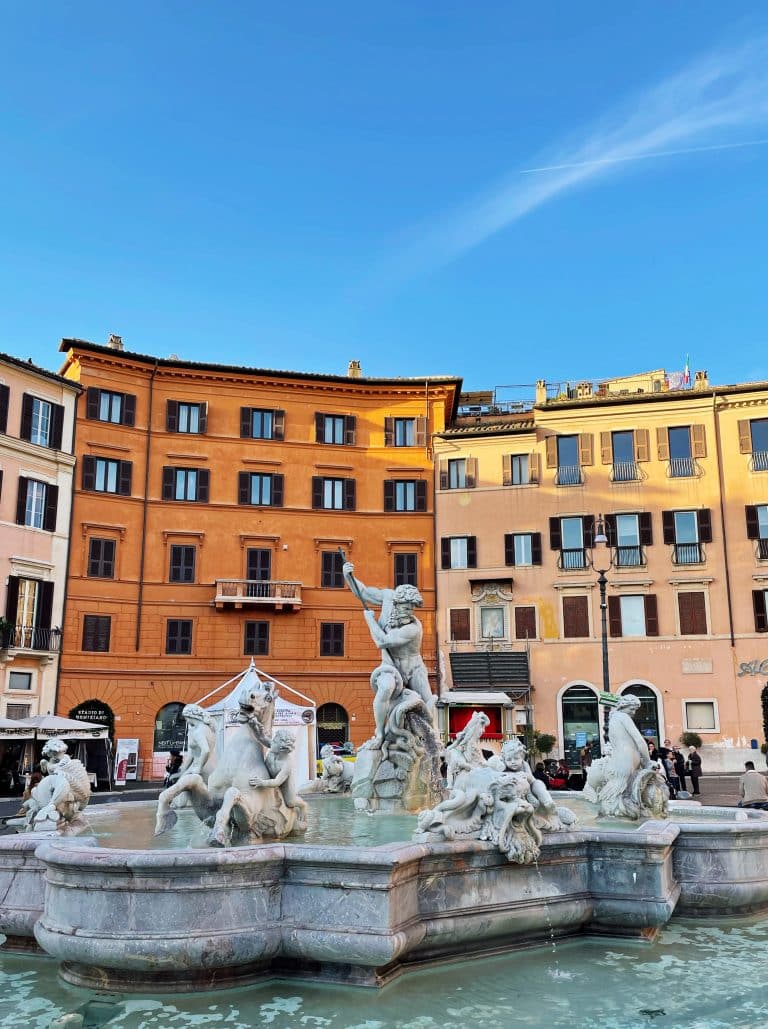
Lined up at the center are three Baroque fountains, two by Bernini and one by Giacomo della Porta, that tell both grand and mysterious stories.
The Fontana dei Quattro Fiumi (Fountain of the Four Rivers) sits at the center of the square and features dramatic figures representing the world’s great rivers, sculpted by the legendary Gian Lorenzo Bernini.
Also sculpted by Bernini, the charming Fontana del Moro showcases a nautical scene where a Moor is fighting with a dolphin.
The third fountain, my personal favorite, is the Fontana di Nettuno, originally by Giacomo della Porta. This fountain showcases Neptune battling sea creatures, and trust me – you want to get close and look carefully at each creature. 😂
Sant’Agnese in Agone (Hidden Gem)
- 📍 Location: Via di Santa Maria dell’Anima, 30/A, 00186 Roma RM, Italy
- 💰 Price: FREE

While soaking in the vibrant atmosphere of Piazza Navona, don’t miss the chance to step inside the magnificent Sant’Agnese in Agone church. Free to enter, this hidden gem is a 17th-century Baroque masterpiece that offers a peaceful contrast to the Piazza Navona.
Sant’Agnese in Agone honors Saint Agnes, a young martyr, with artwork and sculptures that tell her story.
When you step inside, you are surrounded by breathtaking frescoes, intricate stucco, and a delicate glow of natural light filtering through stunning stained-glass windows. Make sure to take a moment to look up and soak in the beauty surrounding you.
This church was designed by some of the era’s most famous architects, including Francesco Borromini, whose innovative curves and dramatic architecture make the space feel both grand and intimate.
Note. This is a place of worship, and there are people who come here to pray. While it’s beautiful to visit, please be respectful of the place and the people there.
Arco dei Banchi (Optional Hidden Gem)
- 📍 Location: Via del Banco di Santo Spirito, 47, 00186 Roma RM, Italy

The last hidden gem of the weekend simply has to be the dreamiest one, right?
Welcome to the Arco dei Banchi, an ancient Roman arch in the heart of Rome that dates back to the 16th century.
In the Renaissance period, this place was filled with desks of bankers, scribes, and merchants who would work there.
All that is left is a small section of it, but nonetheless, it remains a must-see – especially if you’re a sucker for starry skies and deep, vibrant blue color.
This hidden gem is a quick 8-minute walk from Piazza Navona. Come here to take a quick break and get mesmerized by the endless, hand-painted, little stars. ✨🌌
Campo de Fiori

To end the day, head to the beautiful Campo de’ Fiori – a bustling marketplace by day, and a lively social hub by night. This is a fun area to stroll around and grab dinner or drinks at.
This square receives its name, “Field of Flowers”, as a reminder that this area was once a meadow – before it became a square.
For a bit of dark history, right in the middle of this square is the statue of Giordano Bruno. He was a philosopher who was burned at the stake in the 17th century for heresy.
If you’re still in the mood for more adventures and enjoy a darker experience, here is one of Rome’s best-rated night tours that starts right in Campo de Fiori! 👀
2 Days in Rome Itinerary Map
Here is a little map showing the route of this 2-day Rome itinerary. Open this map as you wander throughout Rome to ensure smooth navigation.
As a note, there is a limit to how many locations you can add per layer on Google Maps. As a result, the map focuses on landmarks and attractions farther apart.
Early Mornings
If you hope to see certain attractions with fewer crowds, early mornings will be your best bet! Usually, around 11 am and 12 pm are when more people start to head into the city.
Scammers & Pickpockets
While Rome is a safe city to visit, it does have many pickpockets and scammers. Always be aware of your surroundings and ensure all your belongings are in a safe spot.
For example, if you have your phone in your jacket pocket, keep your hand on it at all times. Never leave anything valuable on restaurant tables, keep bags in front of you, and so forth.
In addition, if someone gets close to you and offers you something for free, it is a scam. If you see drawings or paintings, or even a clear plastic cup with coins, stay clear to avoid stepping on them.
48 Hours in Rome FAQs
How many days in Rome?
The amount of time you decide to spend in Rome depends largely on your travel plans and how much time you have. Being the eternal city that it is, there will never be enough days to see it all – I mean, I’m still discovering new things 25+ years later. 😂
With that said, I strongly recommend a minimum of 2 full days – but 3 to 4 days are certainly better! Two days is enough to see all the main attractions, but you’ll feel rushed or constantly on the go – keeping you from truly diving into the magic of this city.
With 3 days in Rome or even 4 days, it’s still a shorter trip, but you have time to enjoy Rome’s main attractions, some hidden gems, and my personal favorite – the atmosphere.
Where to stay in Rome for the first time?
The more central, the better! This will help you make the most of your time, as it removes unnecessary commute time. Some nice areas to stay in Rome, besides the Centro Storico, are Trastevere and Prati.
Hotel wise, my top-picks are Piazza di Spagna 9 and H10 Palazzo Galla, both of which are perfectly positioned in the city center and receive stellar ratings.
Piazza di Spagna 9 is an apartment-style stay with direct access to the metro, while H10 Palazzo Galla offers a beautiful, traditional hotel stay.
Want more details? Read my complete guide on the best areas to stay in Rome for first-time visitors!
What is the best month to go to Rome?
The best time to visit Rome depends on personal preferences and restrictions, like the school year and PTO. Personally, I believe that overall October is the perfect month to visit Rome because it’s when the weather is still warm and crowds are lower than in the spring and summer.
If you have the opportunity, I also highly recommend visiting Rome in December. This is when the city is all “dressed up” in beautiful Christmas decorations, and everyone is in a festive mood.
Is Rome a walkable city?
Rome is one of the most walkable cities you’ll visit!
The only thing worth noting is that some areas have cobblestone streets, and with the assumption you’ll be walking about 15-20,000 steps a day, make sure to wear comfy, already-broken-in sneakers.
📌 Pin it for your Future Italy Travels!
How excited are you to be spending 2 days in Rome?! 😍
Let me know in the comments if it’s your first time visiting the Eternal City, and what you are looking forward to the most!
Share this with family & friends who are planning to travel to Rome and would find this helpful. 🤩
Follow me on YouTube for my future Rome and Italy travel videos and other worldwide adventures, or on Instagram!🗺️