How to Spend One Day in Cordoba | The Perfect Itinerary
Traveling around Andalucia and considering to spend one day in Cordoba? You’re in the right place!😍 Cordoba is hands down one of the most incredible cities to visit in Spain, and hot take: I think it beats Seville.🫢
Just a 50-minute train ride from Seville and 2 hours from Granada, Cordoba is a heavily underrated city that is often overlooked. With over 2,000 years of history, Cordoba is layered with Roman, Moorish, Jewish, and Christian influences. It was once one of the most important cities in the world and is now the only city with four UNESCO World Heritage Sites.
And if my fangirling isn’t enough, I adore this city so much I’ve visited 3 times and plan to keep going back. Since I usually travel from Granada, I’ve experienced Córdoba as a day trip more often than as a longer stay – which is exactly why I’ve crafted this perfect one day in Cordoba itinerary.
This walkable guide takes you through the city’s main attractions, including the Mezquita-Catedral, Cordoba patios, the Jewish Quarter, the Roman Bridge, local restaurants, hidden gems, and my personal tips to help you make the most of your trip.
Without further ado, here’s how to spend the best one day in Cordoba, Spain – perfect for first-time visitors and repeat travelers looking for more inspiration.👇
Disclaimer: This post has affiliate links that can help me earn a small commission, at no extra cost to you. If you click through and buy with these links, thank you in advance for the extra support.💖😊
How to Spend the Perfect One Day in Cordoba
Don’t have time to read yet? Grab my Quick Recommendations!👇
🕌 Book: Mezquita-Catedral Guided Tour
🏠 Stay: H10 Palacio Colomera
🚆 Transport: Compare trains and buses
🧳 Luggage: Store bags with Bounce
One Day in Cordoba Itinerary at a Glance
Morning: Puerta de Almodóvar, Mezquita-Catedral, Bell Tower
Late morning: Historic Center, Judería, Casa Andalusí, Cordoba Synagogue
Lunch: Casa el Pisto (Gluten Free) or Restaurante el Churrasco
Afternoon: Cordoba Patios and optional Alcázar
Evening: Puente Romano, Calahorra Tower, sunset viewpoint
Walk through Puerta de Almodóvar

One of the coolest things about Cordoba’s historic center is that it is surrounded by the puertas, “doors”, and murallas, “walls”.
The Puertas and Murallas of Cordoba are remnants of the city’s fortified past, dating back to Roman and Moorish times. They once played a crucial role in defending the city from any invaders.
There are different gates you can enter through, but two of the most famous are Puerta de Almodóvar and Puerta del Puente, which is on the opposite side of the Historic Center near the Roman Bridge and Calahorra Tower – where we’ll end the day. 😉
Sure, it’s a little extra, but walking through Puerta de Almodóvar is a great way to officially “enter” the Historic Center and begin your perfect one day in Cordoba.
Morning at La Mezquita-Catedral and Bell Tower
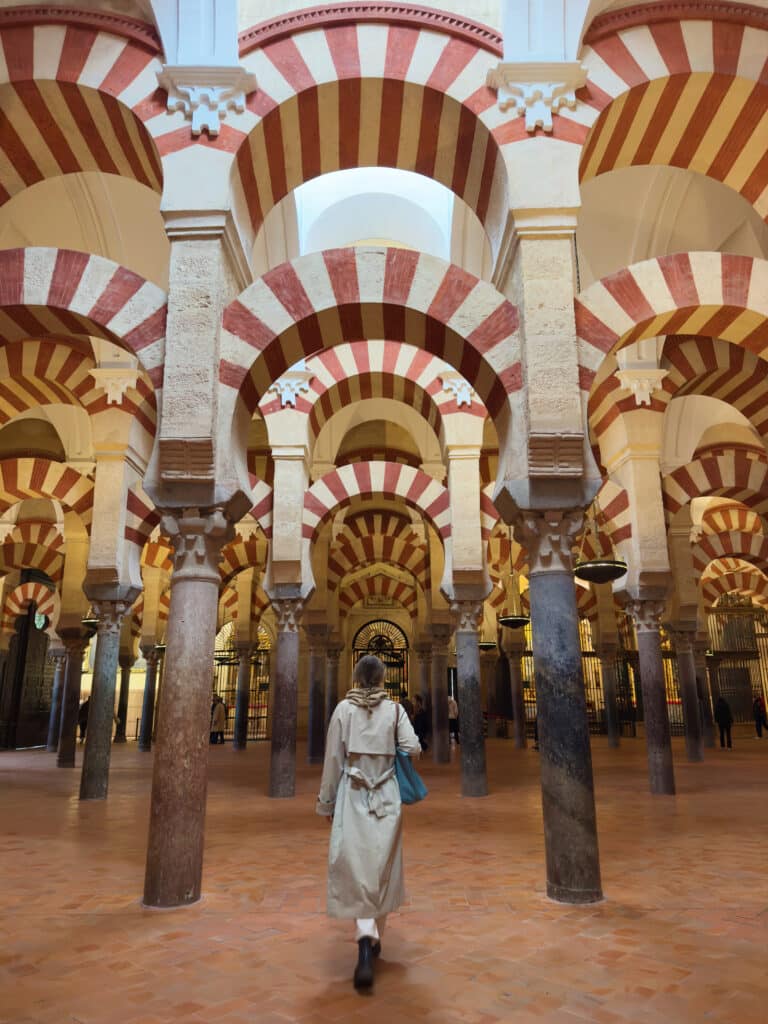
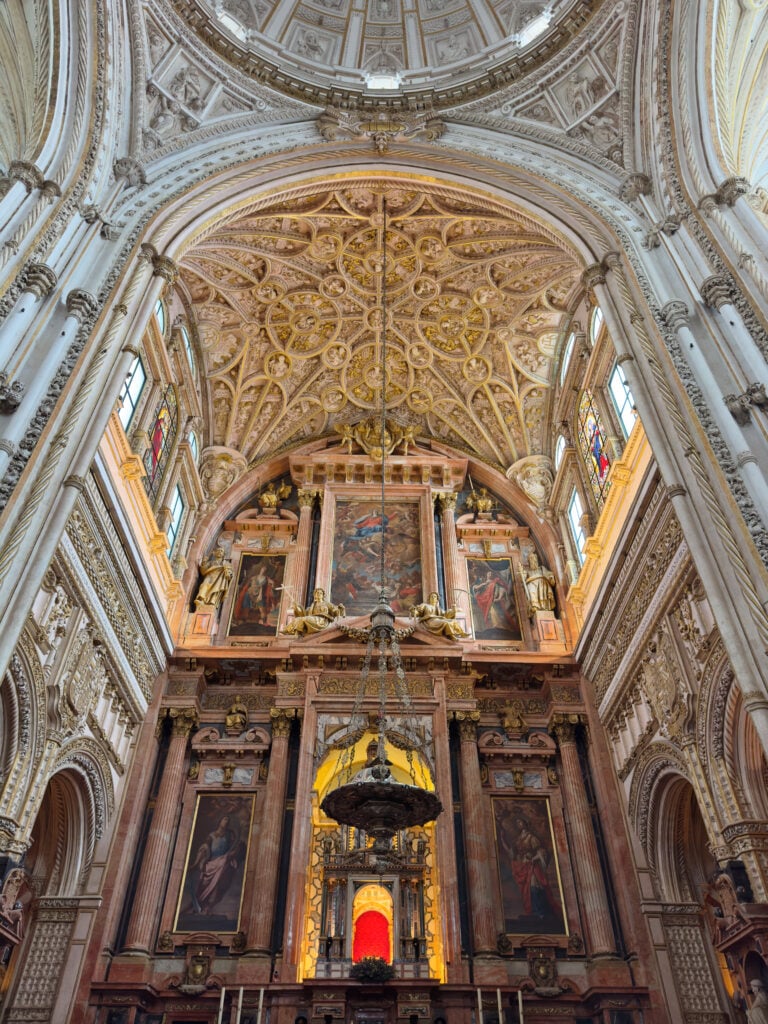
Now that you’ve entered Cordoba’s Historic Center, start your day with the one and only La Mezquita-Catedral, also known in English as the Mosque-Cathedral of Cordoba.
This UNESCO World Heritage Site is nothing short of mesmerizing. With a history going back to the 5th century, the site was originally home to a Visigoth basilica. When the Moors conquered Cordoba in the 8th century, they built a mosque on the site, which continued expanding until the 10th century and became one of the largest mosques in the world.
Centuries later, after the Reconquista, the Catholic Monarchs preserved the mosque and built a Renaissance cathedral nave inside it.
Not only is the Mezquita-Catedral an immense work of art, but it is also a powerful representation of Cordoba’s layered religious and cultural history. I’ve visited three times so far and trust me – it’s a building you can never get tired of seeing.
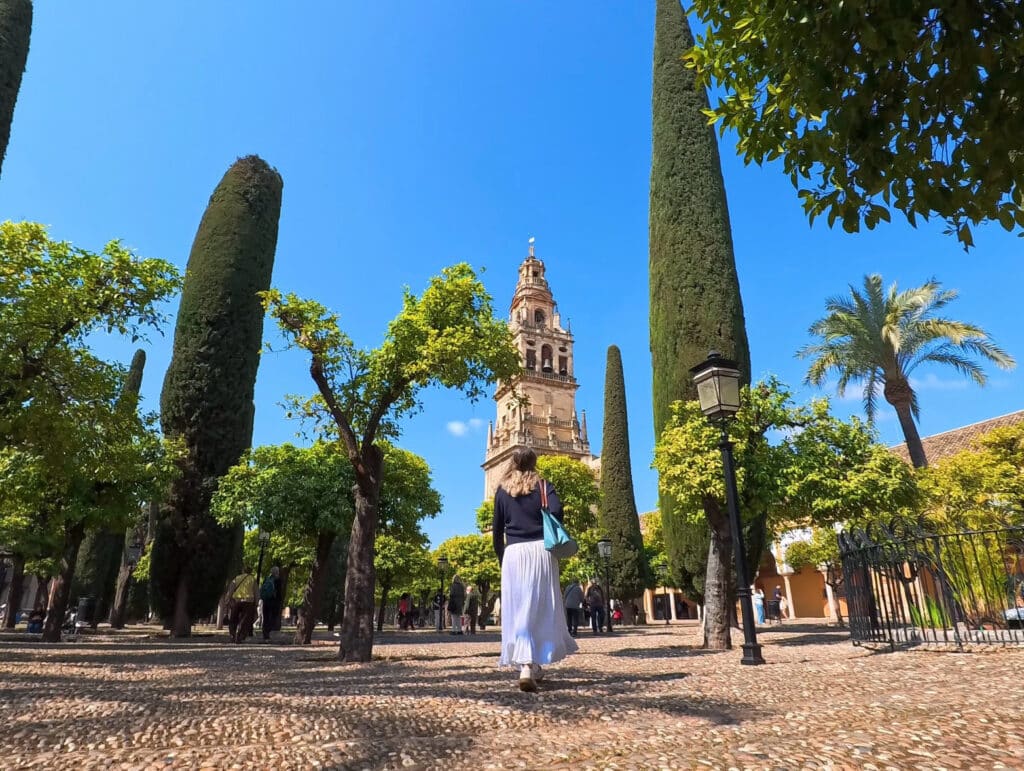
The Mosque-Cathedral also has a beautiful courtyard, the Patio de los Naranjos, and a Bell Tower that was originally a minaret. The Bell Tower costs €3 to visit and offers some of the coolest panoramic views over Cordoba and the Mezquita-Catedral.
The Bell Tower visit lasts around 30 minutes, and I recommend visiting it before the Mezquita-Catedral. Because both have timed entries, make sure to double-check that your time slots do not overlap.
The Patio de los Naranjos is free to visit, and you can enter at any time of day. It’s a beautiful courtyard filled with orange trees, fountains, and cobblestones. If you visit in March, you may even get to enjoy the scent of orange blossom. Either way, I highly recommend taking a few minutes to slow down here.
An average visit to the Mezquita-Catedral lasts around 1 to 1.5 hours, whether you visit independently or with a guided tour.
Tickets do not always sell out far in advance, but I strongly recommend booking ahead so you can secure a morning visit and keep your itinerary flexible. The same goes for guided tours, especially if you want to understand the history behind what you’re seeing.
Tickets do not always sell out far in advance, but I strongly recommend booking ahead so you can secure a morning visit and keep your itinerary flexible. The same goes for guided tours, especially if you want to understand the history behind what you’re seeing.
For more details, read my full Mezquita-Catedral guide with all the essential tips and things to know.
Stroll around the Historic Center

Once you’re done visiting the Mezquita-Catedral, let yourself stroll around Cordoba’s breathtaking Historic Center, a UNESCO World Heritage Site since 1994.
As you walk through this part of the city, you’ll be surrounded by history, whitewashed homes, artisan shops, orange trees, and endless jaw-dropping beauty. One of the most beautiful areas within the Historic Center is the old Jewish Quarter, also known as the Judería.
What I really love about Cordoba is how compact it is. It’s only an 8-minute walk between two very different worlds: the modern city center and the Historic Center. The Historic Center is where you’ll find many of the best things to do in Cordoba, including the Mezquita-Catedral, the famous patios, Calleja de las Flores, the Judería, Alcázar de los Reyes Cristianos, and beyond.
Something beautiful about Cordoba’s history is the convivencia of Muslims, Jews, and Christians – a period when the three cultures and religions coexisted and shaped the city. Because of this, Cordoba still shows these influences through its architecture, neighborhoods, gardens, and historic sites.
Want to dive deeper into the history of Córdoba? This guided walking tour could be perfect for you.👇
Visit the Casa Andalusí


A hidden gem in Cordoba worth visiting is Casa Andalusí, a traditional Moorish-style house and small museum in the Judería.
Despite its small size, there are plenty of details to admire, including courtyards, ancient coins, books, and a model of historic paper-making machines. If you’re lucky, you may even get to see the cutest resident of the house: a turtle. 🐢
This is a fairly short visit, so you’ll probably spend around 20 minutes here, or 30 minutes max. Entry to Casa Andalusí costs €4, and personally, I thought it was absolutely worth it.
Visit the Cordoba Synagogue

Right next to Casa Andalusí is another gem: the beautiful Cordoba Synagogue. Located in the heart of the Judería, or Jewish Quarter, this is a small but important stop on your one day in Cordoba itinerary.
Dating back to the early 14th century, it is the only medieval synagogue left in Andalusia and one of only three surviving medieval synagogues in Spain.
The Córdoba Synagogue is free to enter, and because it is quite small, you only need a few minutes to admire it. However, if you want to learn more, there are several information panels inside explaining the building and what you’re seeing.
Lunch at Restaurante el Churrasco


Now that your eyes have feasted on several spectacular views, it’s time for your stomach to do the same.
Whether you’re celiac or not, one of the best restaurants in Cordoba is Taberna de San Miguel, also known as Casa el Pisto. This restaurant is mainly frequented by locals and is a 100% gluten-free Cordoban restaurant. In other words, it’s the perfect place to stuff yourself with delicious local cuisine.
I’ve been a couple of times already, and I wish I could pack it in my suitcase so I could eat there anytime I crave flamenquín cordobés or croquetas. 😂
If you don’t want to leave the Historic Center, Restaurante el Churrasco is another authentic Cordoban restaurant. If you eat meat, I strongly recommend having at least one rabo de toro during your Andalucía travels, whether that’s in Cordoba or another city. The rabo de toro at both Casa el Pisto and Restaurante el Churrasco was to die for.
Some dishes worth trying in Cordoba are the flamenquín cordobés, churrasco cordobés, salmorejo cordobés, berenjenas fritas con miel, and pastel cordobés.😍
As someone who always needs a little sweet ending to her meals, I highly recommend being on the lookout for pastel cordobés, a traditional flaky pastry from Cordoba. For my fellow celiacs, Sana Locura makes an incredible gluten-free pastel cordobés.
Visit the picturesque Cordoba Patios

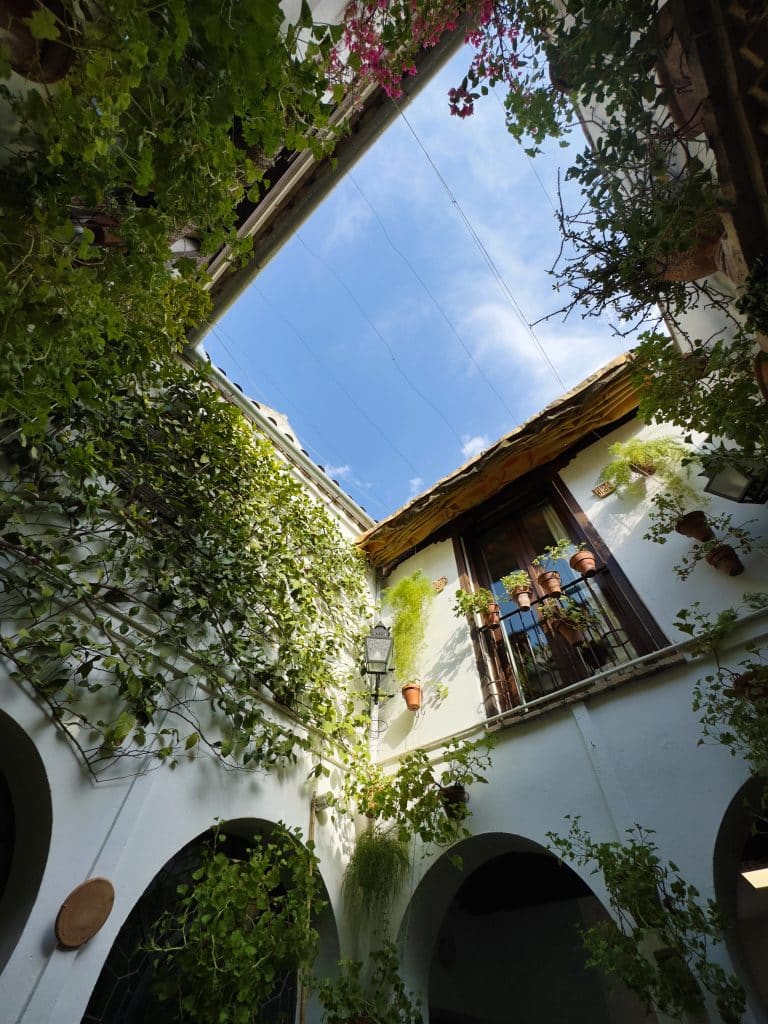
Scattered around the city are the vibrant and picturesque Cordoba patios – courtyards that usually serve as communal spaces within homes.
The origins of these patios date back to ancient Roman times, when inner courtyards were first introduced into homes. They flourished even more when the Moors conquered Andalusia in the 8th century and expanded the tradition of creating ornate, peaceful patios.
The Moors, with their advanced architectural and horticultural knowledge, transformed courtyards into mesmerizing spaces filled with intricate tile-work, fountains, flowers, and gardens. They were also designed to help cool homes during Cordoba’s brutal summer heat.
Most Cordoba patios are characterized by colorful flower pots, whitewashed walls, tilework, fountains, and lush plants. Many of them are still inside private homes, and the families who maintain them dedicate a lot of time to caring for the flowers and opening their spaces to visitors.
Most patios are private, but more than 60 open to the public in May for the famous Festival de los Patios, which is recognized by UNESCO as Intangible Cultural Heritage.
In the San Basilio neighborhood, you’ll find award-winning and historic patios that are open year-round. My personal favorite patio is San Basilio, 20. While some patios are technically free to enter, it is strongly encouraged to leave a small tip to support the families who maintain them.If you prefer to be guided around the patios and learn more about their history, check out this highly rated Cordoba patios tour. 👇
✨ You can also grab my Ultimate Guide to the Best Patios of Cordoba for more details.
Visit the Alcazar of the Christian Monarchs


Note: Before visiting, double-check the official opening hours, as the Alcázar may occasionally close for restoration work, holidays, or schedule changes.
As the day starts to come to an end, head to the beautiful Alcázar de los Reyes Cristianos.
Throughout history, this medieval palace and fortress served several roles, but its most important was as a royal residence for the Catholic Monarchs. Architecturally, it is not the most impressive attraction in Cordoba, but its courtyards and gardens are absolutely worth seeing.
As the sun gets lower, the gardens are covered in beautiful golden-hour light, making this a perfect place to slow down and soak in everything you’ve seen throughout the day.If you want to be guided through the Alcázar, book your skip-the-line tickets here!👇
Walk the Puente Romano de Cordoba
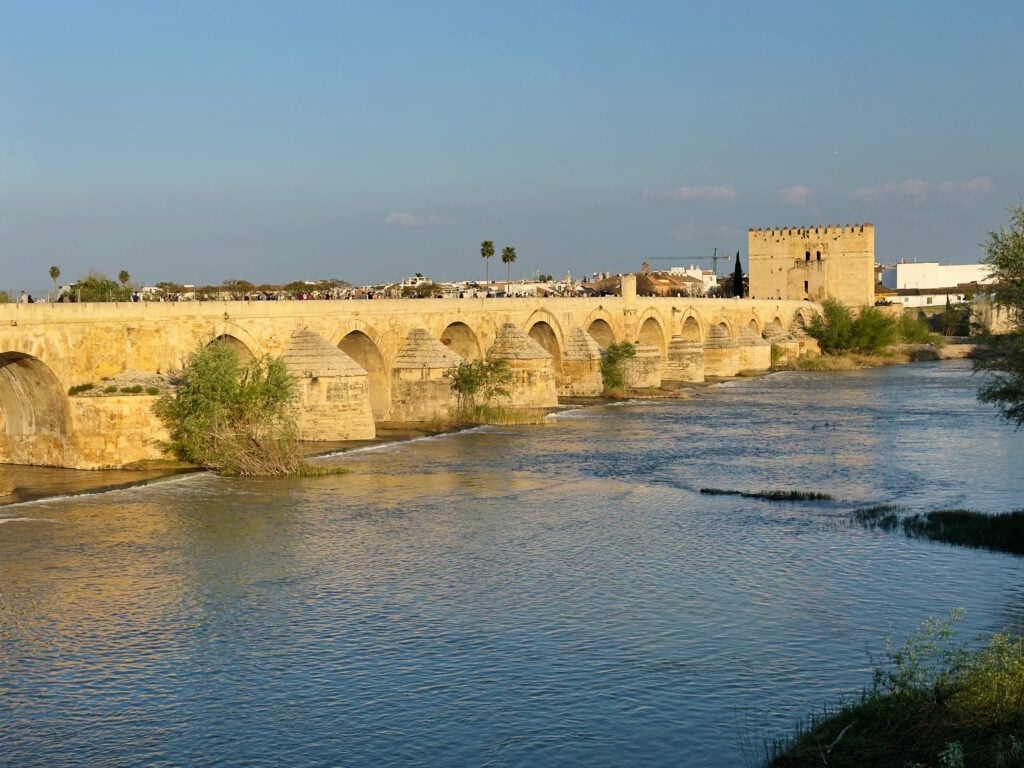
The best way to end your day in Cordoba? On the Puente Romano de Cordoba. 😍
Dating back to the 1st century BC, this Roman bridge is a testament to the Roman Empire’s engineering and influence in the city.
Spanning the Guadalquivir River, the Puente Romano connects the old city with the area around the Calahorra Tower. From here, you’ll get beautiful views of Cordoba’s Historic Center, with the Mezquita-Catedral rising above the rooftops.
You’ll often find people performing along the bridge, which adds even more life to an already spectacular setting. If you have time, make sure to stay for sunset.At the end of the bridge, take a moment to admire the Calahorra Tower, Cordoba’s oldest defensive tower and today home to the Al-Andalus Museum.
Enjoy the Best Sunset in Cordoba
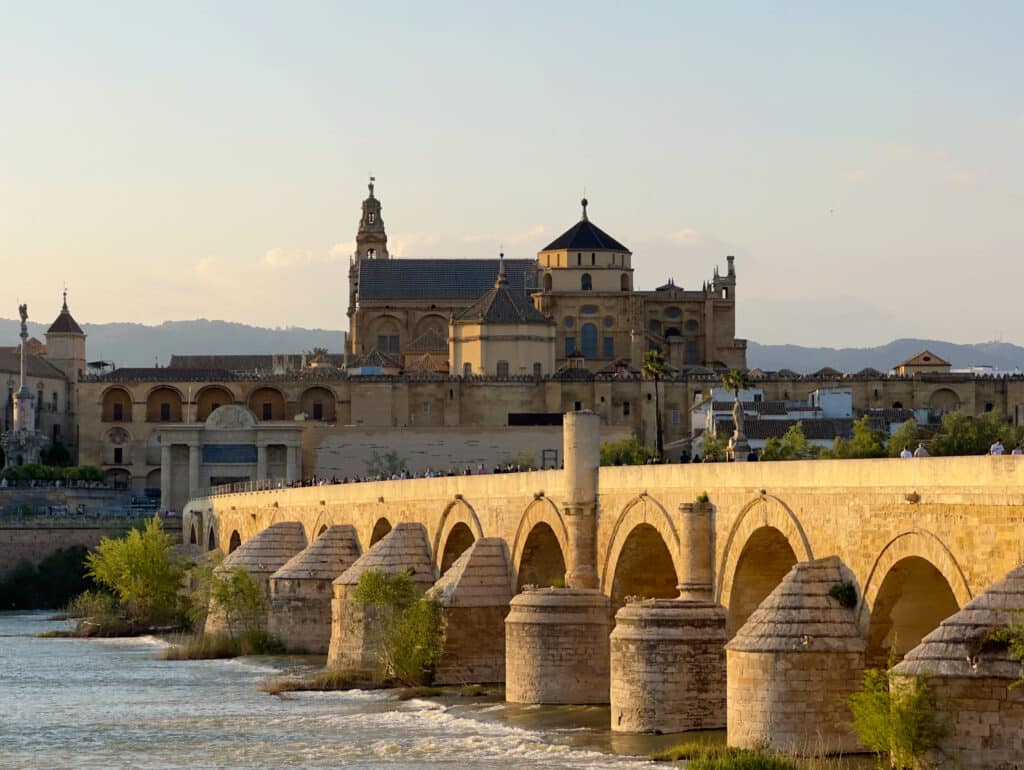
Once you’ve walked across the Puente Romano, continue past the Calahorra Tower and take a right toward the small park along the river. From here, you’ll get one of the best sunset viewpoints in Cordoba.
This spot gives you the most spectacular view of the Mezquita-Catedral, Historic Center, Calahorra Tower, and Puente Romano all together. I mean… if this isn’t the absolute best way to end the perfect one day in Cordoba, I don’t know what is.
Spend One Day in Cordoba with Me!
Want to see this itinerary in action and understand exactly what one perfect day in Cordoba, Spain, looks like? Great, because I vlogged it all!
In the video, you’ll see several stops from this one day Cordoba itinerary, including the Mosque-Cathedral, the Jewish Quarter, sunset by the Puente Romano, and local food spots. You’ll also get extra insider tips, more context, and (most importantly) a good time.🥳
Subscribe to my YouTube channel for future Andalucía travel vlogs, video guides, and worldwide adventures.

What to Know before your One Day in Cordoba
Best Months to Visit Cordoba
While many may suggest the best time is the Spring time, I highly recommend visiting in the Winter or Fall! By visiting Cordoba during months like late January and February, or September and October, you will find comfortable temperatures and fewer crowds.
The only reason I’d advise Cordoba in the springtime would be if you feel strongly about attending a festival, such as the Patio Festival – or it’s the only time you can travel and you don’t mind crowds.
What to Book in Advance
In my personal experience, you do not need to book things too far in advance for Cordoba, especially compared to Seville and Granada. However, if you’re visiting during peak season, I highly recommend booking your Mezquita-Catedral tickets or guided tour around three weeks in advance so you can secure the best timed entry for your itinerary.
You should also book your train or bus in advance if you want your preferred departure time, better seat options, and, in the case of trains, better prices.
Where to Stay in Cordoba
The best area to stay in Cordoba is the Centro or Historic Center, especially if it’s your first time visiting.
As a celiac, my top hotel recommendation is H10 Palacio Colomera, which is in the Centro and has the most perfect location. It’s about a 5-minute walk from an amazing 100% gluten-free bakery and restaurant, and only around an 8-minute walk from the Mosque-Cathedral.
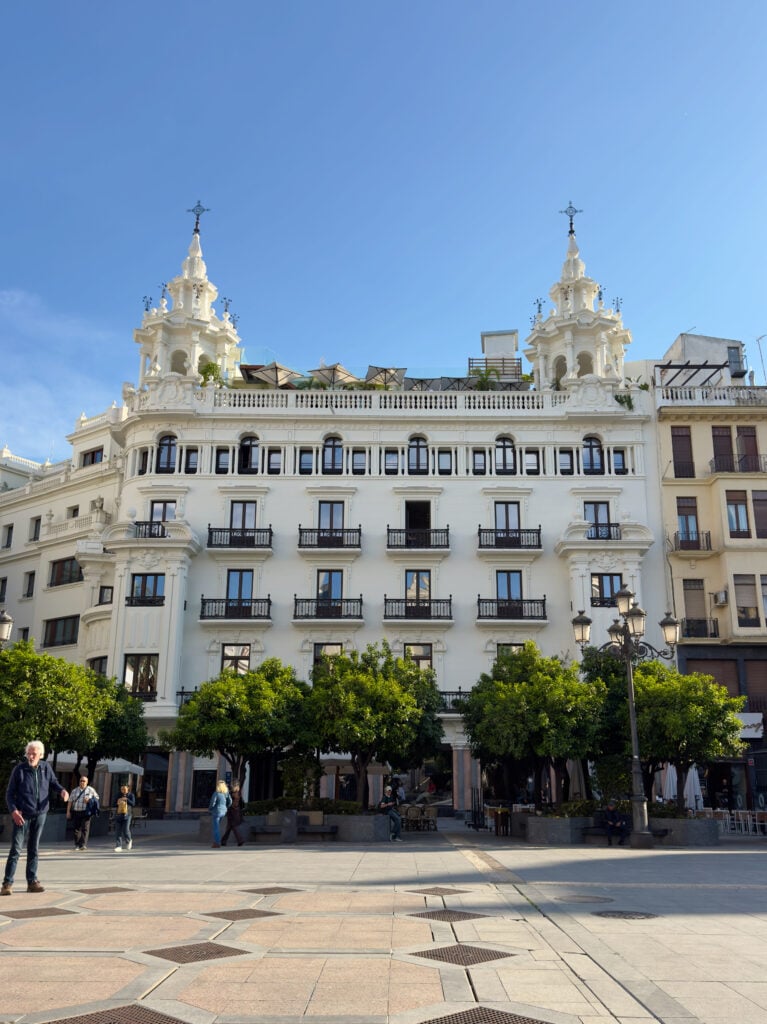
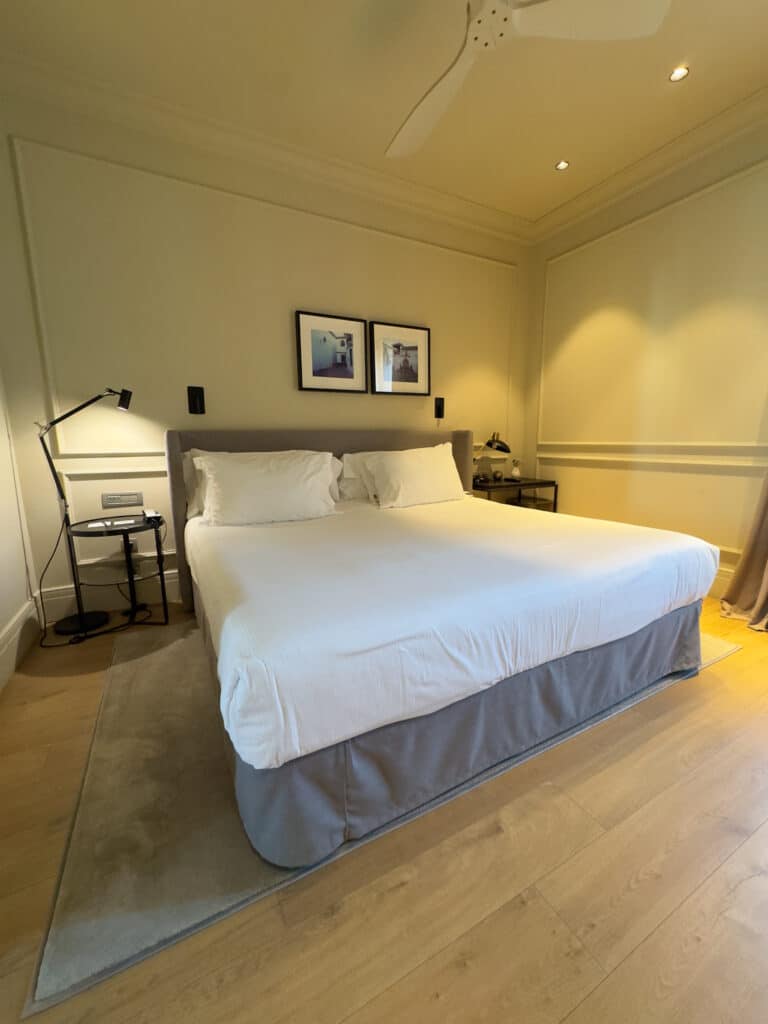
I personally stayed at H10 Palacio Colomera and loved it so much that it was painful to leave. The hotel itself is stunning, the staff couldn’t be more wonderful, and the location is unbeatable – for both celiacs and non-celiacs.
☀️ Book your stay at H10 Palacio Colomera here!
Another highly loved hotel in Cordoba is Las Casas de la Judería Cordoba, a 4-star hotel in the heart of the Historic Center.
How to Get to Cordoba from Seville, Granada, or Málaga
The fastest and most convenient way to get to Cordoba from Seville, Granada, or Málaga is usually by train. Renfe’s high-speed AVE trains are more expensive than buses, but they are often the quickest option. From Seville, you can reach Cordoba in around 45 to 50 minutes by train.
That said, I personally love Alsa buses. They are usually more budget-friendly, comfortable, reliable, and, in my experience, often run on time. The downside is that the bus journey from Seville to Cordoba can take closer to 2 hours.
I highly recommend using Omio (my fave) to compare train and bus options in one place so you can easily check times, prices, and travel durations before booking.
No matter which city you visit Cordoba from, Seville, Granada, or Malaga, the most convenient way to get to Cordoba will always be Renfe’s high-speed AVE trains. However, it’s important you consider your personal preferences and budgets. Like I said, I love the coach buses!
If you want to visit Cordoba without planning the logistics yourself, you can also book a guided day trip from:
FAQs
Is one day enough in Cordoba?
Yes, one day in Cordoba is enough to experience the city’s main attractions and a few hidden gems, especially if you follow a walkable itinerary like this one. In one day, you can visit the Mezquita-Catedral, Judería, Cordoba patios, Roman Bridge, Historic Center, and a sunset viewpoint.
With that said, I strongly recommend spending two to three days in Cordoba if your itinerary allows it. With more time, you can spread out this route, enjoy the city at a slower pace, and potentially take a half-day trip to Medina Azahara.
But if you’re debating day trips from Seville and only have one day, I highly recommend choosing Cordoba. One day in Cordoba is definitely better than no days in Cordoba.
How to Get Around Cordoba in One Day
Cordoba is one of the most walkable and compact cities in Andalucía, so the best way to get around is by foot. Most of the main attractions in this itinerary are located in or near the Historic Center, which makes it easy to explore without a car.
Is Cordoba Worth Visiting?
Absolutely. Cordoba is rich in history, culture, architecture, food, and beautiful places to see. It is especially worth visiting if you love historic cities, layered cultural heritage, patios, and walkable old towns.
Is Cordoba worth a day trip?
Abso-freaking-lutely, it is! Cordoba is one of the best day trips in Andalucía because the city is compact, walkable, historic, and full of must-see sights.
One day in Cordoba is enough to explore the Historic Center and visit many of the city’s highlights, including the Mezquita-Catedral, Judería, patios, Roman Bridge, and sunset viewpoint.
If you want to experience more of Cordoba beyond the Historic Center, then I recommend staying two to three days.
Should I spend the night in Cordoba or do a day trip from Seville?
If you’re staying in Seville, you can easily visit Cordoba as a day trip. However, I do think spending one night in Cordoba is worth it if you have the time. Staying overnight lets you experience the city after many day-trippers leave, catch a beautiful sunset, enjoy dinner at a slower pace, and see the Historic Center light up in the evening.
Based on my stay at H10 Palacio Colomera, I’d recommend spending the night just to experience that hotel. 10/10 would move there if allowed. 😂😍
Which is better, Cordoba or Malaga?
If you’re building an Andalucia itinerary and debating between Cordoba and Málaga, I’ve visited both and personally think Cordoba is better if you want a cultural, historic, and deeply Andalusian experience.
Cordoba is compact, walkable, full of history, and easier to explore in two to three days. Malaga, on the other hand, is larger and more spread out. It is a great choice if you want a beach-focused trip or a mix of city and coast.
In other words, if you want history, architecture, patios, and culture, choose Cordoba. If you want beaches and a more relaxed coastal trip, choose Malaga.
Grab my e-Checklist to make sure you’re properly prepared for Andalusia!👇
📌 Pin it for your Future Spain Travels

Which of these places would you want to visit first?😍
If you found this helpful, share this with family and friends!😊
Follow me on YouTube for my travel vlogs and other worldwide adventures, or on Instagram!🗺️