

The Perfect 10 Day Japan Itinerary for First Time Visitors
Planning your very first trip to Japan and not sure where to start? First things first, I could not be more excited for you, and second… I got you!! 😍This 10-day Japan itinerary includes a first-time visitor’s must-visit destinations, as well as some less-visited spots.
Visiting Japan for 10 days is enough to hit the main attractions and go a bit off the beaten path. This was my personal itinerary, with a few additional tweaks and essential tips from what I learned during my own travels.
Without further ado, here is your 10-days in Japan itinerary!👇
Disclaimer: This post has affiliate links that can help me earn a small commission, at no extra cost to you. If you click through and buy with these links, thank you in advance for the extra support.💖😊
A First-Time Visitor’s 10-Day Japan Itinerary
Don’t have time to read yet? Grab my Quick Recommendations!👇
✅ Prepare: Grab my FREE Japan Essentials eChecklist to make sure you are properly prepared!
🗺️ Insurance: Protect yourself on your trip with Travel Medical Insurance.
📱 Connect: Always stay connected, and do so seamlessly, with a Japan eSim!
🇯🇵 Guides: 3-Day Tokyo Itinerary, 2-Day Kyoto Itinerary, 2 Days in Kanazawa
😋 Gluten Free Restaurants: Gluten Free Tokyo, Gluten Free Kyoto, Gluten Free Kanazawa
Day 1-3: Tokyo
🏠 Find the Best and Most Affordable Stays in Tokyo


Welcome to your first destination in Japan – the one and only, Tokyo!
Before we dive into your first three days in Tokyo, it’s crucial for me to share the reminder that Tokyo is NOT just a big city, like London or Rome.
Tokyo is a metropolitan prefecture that has 23 wards, 26 cities, 8 villages, and more. This is something I was not aware of until I got to Tokyo myself, and it’s super important you know this.
3 days in Tokyo is enough to see its main attractions and most iconic cities and neighborhoods. Because of how large Tokyo is, I strongly recommend staying in Shibuya or Shinjuku. These two cities are home to Tokyo’s most famous attractions and are the most central and best connected.
Alright, let’s get into your first three days in Japan and Tokyo! 😍👇
4 Best Things to Do and See in Tokyo in 3 Days
🗺️ Check out my other Tokyo itineraries for a detailed, day-by-day breakdown: 3 Days in Tokyo Itinerary or 5 Days in Tokyo Itinerary
Shibuya Scramble Crossing
One of the most iconic things to do in Tokyo is to walk across the Shibuya Scramble Crossing – one of the largest crossings in the world. One traffic light change sees over 2,500 people! 🤯
Shinjuku’s Golden Gai
Shinjuku is one of Tokyo’s most famous cities/wards and is a must-visit. One of the best things to do there is to visit the Golden Gai – a network of small streets full of local favorite izakayas. Izakayas are small restaurants/bars frequented mostly by locals.
teamLab Planets
When in Japan, you simply must visit an iconic teamLab exhibition! teamLab Planets is a smaller exhibition that takes 1.5 to 2 hours to visit. Here you will find the iconic mirror room, as well as a spectacular room of 13,000 floating orchids! 😍
teamLab Planets is one of the fastest-selling activities, so make sure to get your tickets now before they sell out!👇
Sumo Show
What’s a more Japanese activity than attending a Sumo Show?
What’s special about this best-rated sumo show is that ex-sumo wrestlers prepare you one of their meals, chicken hot pot, and then you get to witness a sumo wrestling match! With this experience, you’ll get to truly enjoy this sport and learn all about it from a deeper cultural perspective.
Book your tickets now before they sell out!😍👇
Day 4: Fujikawaguchiko (Mt. Fuji)
🏠 Stay in Lake Kawaguchiko’s best Ryokans: Togawaso $$ and Konansou $$$


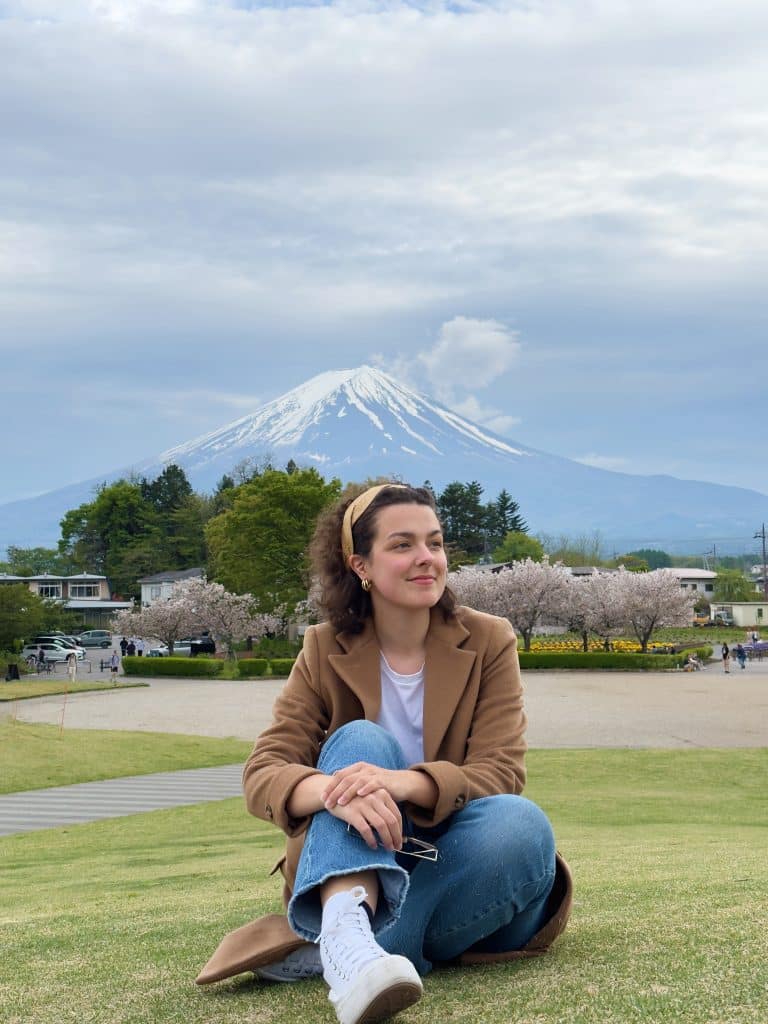
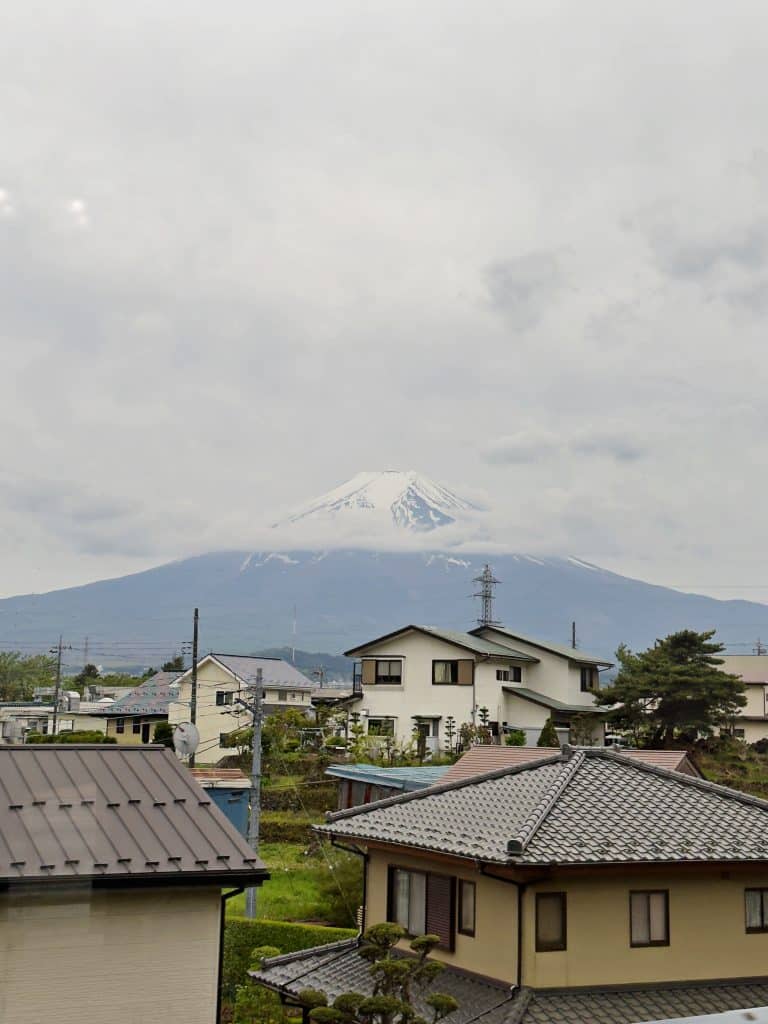
Did you really go to Japan if you didn’t say “hello” to the beautiful Mount Fuji?🗻
Fujikawaguchiko, also known as the town of Lake Kawaguchiko, is a destination famous for taking iconic photos of Mount Fuji. Most people tend to visit as a day trip for photos, but I can promise you – there is SO much more to this little town.
Lake Kawaguchiko is only a couple of hours away from Tokyo, and is super easy to reach.
There are several ways to reach Mount Fuji from Tokyo, including highway buses, renting a car, or joining a group trip.
While I personally recommend staying 2 days in Lake Kawaguchiko, it is also a phenomenal day trip. With only 10 days in Japan, it’s best to visit as a day trip, or enjoy a traditional Ryokan stay and return to Tokyo the morning after.
4 Best Things to Do and See in Lake Kawaguchiko in One Day
🗺️ Check out my detailed, day-by-day Lake Kawaguchiko itinerary here!
Fuji Shibazakura Festival [spring seasonal]

One of the best things to do near Mount Fuji is visiting the incredible Fuji Shibazakura Festival, which occurs every Spring. Here, you will find over 800,000 stalks of shibazakura, also known as “pink moss”.
Shibazakura is a 30-minute commute from Lake Kawaguchiko, and you can easily book your bus and entry tickets together at the Fujikawaguchiko Station.
Lake Kawaguchi Maple Corridor / Momiji Kairou [fall seasonal]
If you’re visiting Japan in the fall, you’re in for a major foliage treat! One of the best spots to admire Lake Kawaguchiko’s foliage is the Momoji Kairou or “Maple Corridor”.
Bike around Lake Kawaguchiko
One of the best things to do in Lake Kawaguchiko is to bike around the lake itself and take in the breathtaking nature that surrounds you. As you go around this lake, you will come across several places worth visiting – including the Panoramic Ropeway, Kubota Itchiku Art Museum, and Oishi Park.
You can easily rent your bike at the Kawaguchiko Station, where there are several bike rental shops. Some even offer electric bikes.
Stay in a Ryokan and Enjoy an Onsen
When in Japan, especially in a smaller and/or more traditional town, you simply must stay in a Ryokan and have an onsen experience! In Lake Kawaguchiko, the two best Ryokans are Togawaso and Konansou.
Togawaso is the budget-friendly option and the one I personally stayed in. Everything about this Ryokan was wonderful, including the host who offered transportation to the station in the morning.
In this Ryokan, the only private thing is your own room – everything else, bathrooms and onsens, are shared. Book your stay now before it sells out – being budget-friendly, it won’t last long!
Konansou is the more luxurious Ryokan, where you find both a public onsen and your own private onsen. This is the perfect option if you want a more private or intimate experience. Book your spot before they sell out!
Fuji-Q Highland Amusement Park
Are you a roller-coaster lover who’s always ready for the highest heights and fastest speeds? Then you cannot miss out on the Fuji-Q Highland Amusement Park.
This park, as a fun fact, is home to some of the world’s best roller coasters and amusement park rides. The most famous rides, which hold world records, are the Fujiyama, Takabisha, and Eejanaika.
Thanks to its location, you can easily see Mount Fuji from the park and get spectacular views from certain rides.
Day 5-6: Kanazawa
🏠 Find the Best and Most Affordable Stays in Kanazawa


During my travels in Japan, Kanazawa quickly became my favorite Japanese city. I’m finding myself typing quickly because I’m so eager to tell you all about this city.😍
Kanazawa is a city that will make you feel like you’ve stepped back in time. Here you will find incredible Geisha and Samurai districts, architecture, and one of Japan’s most beautiful Gardens – the Kenrokuen.
Kanazawa has a strong history and rich culture, and is also home to several innovations, including the Golden Leaf. As a matter of fact, Kanazawa produces 99% of Japan’s Golden Leaves!
Kanazawa recently received the nickname “Little Kyoto,” but I personally disagree with this. It is NOT like Kyoto, which is a big city filled with temples and shrines at every corner.
Nowadays, people are discussing whether Kanazawa can still be classified as a hidden gem, due to the recent rise in tourism. When I visited in mid-April, Kanazawa was empty – so I’m going to personally call it a hidden gem, or at least a lesser-known destination.
🗺️ Grab my Itineraries: One Day in Kanazawa Itinerary or 2 Days in Kanazawa Itinerary
On the Shinkansen bullet train, Kanazawa is 2.5 hours from Tokyo Station, and 2 hours from Kyoto Station – making it an easy day trip. While one day is better than none, I recommend visiting for 2 days to truly appreciate everything it has to offer.
4 Best Things to Do and See in Kanazawa in 2 Days
🗺️ Check out my detailed, day-by-day Lake Kawaguchiko itinerary here!
Kenrokuen Garden & Kanazawa Castle PArk

Kenrokuen Garden is one of the 3 Great Gardens of Japan, and one of the most beautiful in the country. Its name, “Kenrokuen”, means “garden of the 6 sublimities” – which explains that this garden is home to every quality that makes a Japanese garden “perfect”.
Here, you will find a couple of teahouses, artifacts, rare cherry blossom flowers, and Japan’s oldest fountain. You will also find the Karasaki Pine trees, which are famous for their beauty, and the yukizuri. Yukizuri is a technique that supports the branches of Karasaki Pine trees during the winter months.
Want more information on the Kenrokuen Garden? Read my guide!
Higashi Chaya District

When you look up Kanazawa, 99.999% of the time, you will see a picture of the beautiful Higashi Chaya District. This is Kanazawa’s largest chaya, “teahouse” district, and one of the 3 most historic ones. The Higashi Chaya District was established in 1820 and is where Geishas and Maikos would entertain wealthy merchants.
Nowadays, you will find various teahouses, some of which are historic, restaurants, and artisan shops. If you want an authentic and unique souvenir that also gives back to the locals, buy from and support the artisans.
Some of the best things to do in this district are visiting a teahouse, shopping, or booking a cultural experience.
Nagamachi Samurai District
Just as the name states, Nagamachi is a historic district where Samurai once lived. How cool is that?? 🤯 This quaint district brings a very peaceful atmosphere with a small river that runs through it.
Here, you will find several artisan shops, delicious restaurants, and the incredible Nomura-ke Samurai Residence and the Takada Family House.
The Nomura-ke Samurai Residence is a traditional Samurai Residence that once belonged to a wealthy samurai family who served the Maeda Clan. Being the highlight of the district, if you are fascinated by the Samurai, this is a must-visit!
Omicho Market
Known as Kanazawa’s Kitchen, Omicho Market is over 400 years old and, with more than 180 stalls, is the largest market in Kanazawa. This is the perfect spot to dive deeper into the locals’ daily life and enjoy the freshest seafood and delicious street food.
Day 7-8: Kyoto
🏠 Find the Best and Most Affordable Stays in Kyoto. Best Ryokan is Shiraume!


Known as the “city of 10,000 shrines” and once the capital of the country, Kyoto is the cultural heart of Japan. In other words, Kyoto is a must-visit on your first trip to Japan.
Kyoto is a fairly big city, and many of its must-sees are quite spread out. It doesn’t help that people don’t always specify if they are talking about Kyoto, the Prefecture, or Kyoto the City.
The main things to do in Kyoto include sightseeing at temples and shrines, and cultural activities. When compared to Osaka and Tokyo, Kyoto is the most “quiet” and serene city, where there is little nightlife and things close fairly early.
With that said, 2 full days in Kyoto are enough to see the main attractions. If this sounds like your cup of tea, you could use Kyoto as your home base for the last 4 days of the itinerary and enjoy Osaka as a day trip.
4 Best Things to Do and See in Kyoto in 2 Days
🗺️ Check out my detailed, day-by-day Kyoto itinerary here!
Fushimi Inari Taisha

I would almost say that this is a synonym for the beautiful Kyoto. The Fushimi Inari Taisha is a shrine famous for its 10,000 tori gates – all of which represent donations.
To make the absolute most of your 2 days in Kyoto, this best-rated tour brings you to all of Kyoto’s must-sees in one day.
This tour includes the Fushimi Inari, Arashiyama Bamboo Forest, and the Kinkaku-ji Golden Pavilion. Book your tickets now – before they sell out!👇
Gion District | Walk Sannenzaka and Ninenzaka Street
The Gion District is the most famous Geisha district of Kyoto, where you find several important temples and shrines, teahouses, and historic neighborhoods. When walking around Gion, particularly the more historic streets, you will encounter Geishas and Maikos walking around.
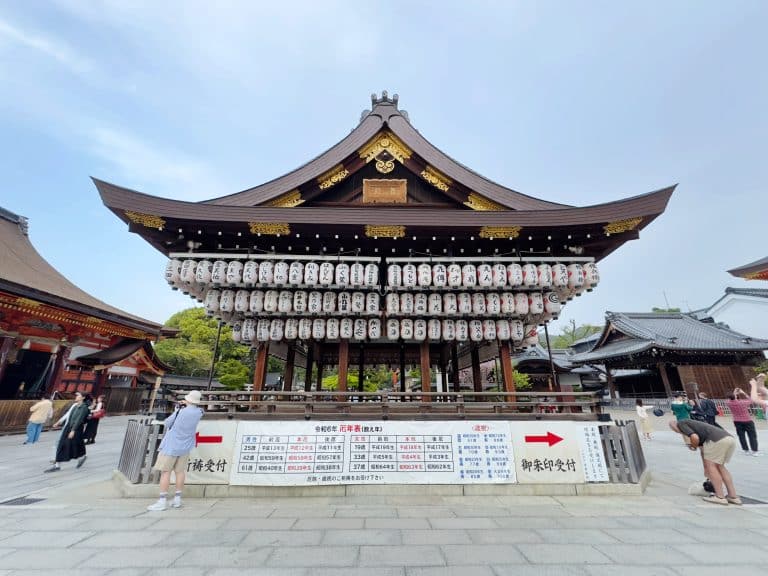
One of the best things to do in the Gion District is to walk the beautiful Sannenzaka and Ninenzaka Streets. Ninenzaka Street is where people take the famous picture of the Hōkan-ji / Yasaka Pagoda.
***Important Note: Due to over-tourism and too many bad apples (rude and disrespectful tourists), Kyoto was forced to impose several rules and tourist bans. Around the Gion District, you will find wooden signs that might tell you “photography/videos not allowed” or “tourists not allowed”. Make sure to look out for those signs and respect them, or you will get a fine. As a final reminder, Geishas are not attractions, they are people – be respectful and leave them alone.
Nishiki Market


Known as the “Kyoto’s Kitchen”, the Nishiki Market is a 400-year-old food market and the largest in Kyoto. Here you will find over 100 stalls and shops, and endless delicious options of street food and fresh seafood.
Note: This is a long, but very narrow market that can get crowded really quickly. If you are someone who struggles in crowds and tight places, you might want to avoid this market.
Arashiyama Bamboo Forest & Kinkaku-Ji Golden Pavilion
About 30 minutes to an hour away from the city center are the incredible Arashiyama Bamboo Forest and the famous Golden Pavilion.
The Arashiyama Bamboo Forest has more than 1,000 years of history, and is home to over 10,000 bamboos. It’s the perfect place to slow down and relax, and really take in everything you’ve seen in your first week in Japan. Most recommend visiting in the early hours, when you can admire the sun rays piercing through.
The Kinkaku-ji is a 24-minute car ride, or a 44-minute bus commute from Arashiyama, and is a wonder of a temple to admire. Also known as the Golden Pavilion, this temple is true to its name as its top two floors are covered in pure gold leaf.
Day 9-10: Osaka
🏠 Find the Best and Most Affordable Stays in Osaka


Welcome to your final destination, Osaka!
Just a 30-minute commute from Kyoto Station, Osaka is part of the “Japan trinity” – in the sense that the 3 must-visit cities for first-time visitors are always Tokyo, Kyoto, and Osaka.
On the contrary of Kyoto, Osaka is a very modern city full of vibrant nightlife and endless street food. If you are someone who prefers late-night adventures and want to indulge in street food, you might want to consider making Osaka your home base for the last 2 days – or the last 4 days. By staying the last 4 days, you can take day trips to Kyoto and Nara.
Here are the best things to do in Osaka.👇
4 Best Things to Do and See in Osaka in 1.5 Days
🗺️ Trying to decide between Osaka vs. Kyoto? Let me help you choose!
Dotonbori
Known as the “Kitchen of Japan”, Osaka is world-renowned for its incredible food scene – particularly street food – and vibrant nightlife. Dotonbori is where this reputation comes from.
In Dotonbori, you surround yourself with endless restaurants and street food stalls. If you want to simply focus on eating and having a good time, here is a best-rated foodie tour! 👇
Universal Studios
If you are a fan of Universal Studios, specifically of Super Mario Bros, then this needs to be on your Osaka bucket list.
Osaka Aquarium Kaiyukan & Ferris wheel
If you are an aquarium lover or encounter a rainy day in Osaka, the Kaiyukan Aquarium is the perfect place to visit! This is one of the biggest aquariums in both Japan and in the world – it’s so big that you’ll find two whale sharks.
Right outside the Kaiyukan, there is a Ferris wheel that lets you see over all of Osaka – a mesmerizing view, especially at night.
When to Visit Japan
The most iconic time to visit Japan is between late March and mid-April for the dreamy cherry blossom season. On my first visit to Japan, I went from mid-April to early May — it was a lovely time, but the cherry blossoms were slowly starting to fade.
Another very popular time to visit Japan is in autumn. This season offers bright fall foliage, mild temperatures, and some of the best weather of the year, making it a favorite for repeat visitors.
If you’re looking to travel during shoulder season, winter is perfect. You’ll encounter fewer crowds, lower prices, and, if you’re interested, excellent skiing in parts of the country, including Hokkaido.
At the end of the day, the best time to visit Japan depends on your personal preferences and travel goals. That said, based on what I’ve learned from both locals and repeat visitors, the one season people recommend avoiding is the summer. Japanese summers tend to be hot and extremely humid – a recipe for disaster. 😅
How to Get Around Japan as a Tourist
The best (and most iconic) way to get around Japan is by train, especially the country’s beloved Shinkansen bullet trains.🚅 They are fast, comfortable, and so incredibly efficient that they arrive at the exact time they are scheduled – to the minute.
How you get around Japan largely depends on your travel plans. For example, if you’re planning to travel between major cities like Tokyo, Kyoto, and Osaka, the Shinkansen will likely be your main mode of transportation. However, because these prices can add up quickly, it’s worth comparing individual ticket costs with JR Pass options before your trip.
Japan’s public transportation system is something you’ll experience daily as a visitor. From subways and local trains to buses and bullet trains, the system is reliable, punctual, and relatively easy to navigate — even if you don’t speak Japanese.
One essential tip: make sure to download Google Translator so you can translate even offline!
In cities like Tokyo, public transportation is essential. Make sure to get a PASMO or Suica card, which is a rechargeable, pre-paid IC card that you can tap to use most forms of public transport.
💡 For more details, make sure to read all of my 20+ essential Japan tips and things I wish I knew!
FAQs About 10 Days in Japan
Is 10 days enough to explore Japan?
10 days in Japan is enough to visit Japan’s most popular cities – Tokyo, Kyoto, and Osaka – and squeeze in some hidden gems or day trips.
Is Japan using credit cards or cash?
Despite being seen as one of the most technologically advanced countries in the world, Japan still relies heavily on cash – especially at smaller restaurants, local shops, and in more rural areas.
With that said, getting cash is easy to get! If you run out of cash or need to top up your IC card, you’ll find plenty of reliable, easy-to-use ATMs throughout cities – most commonly inside convenience stores like 7-Eleven and Lawson.
One small tip: if you plan on shopping, remember to bring your passport to take advantage of tax-free purchases.
How much money will I need for 10 days in Japan?
This completely depends on your own budget and what you want to experience in Japan. I was there with my boyfriend for 14 days, and we spent around $2,000 on our stay and somewhere around $2,000 to $3,000 on transportation, food, entertainment, and shopping. As a couple who spent 2 weeks in Japan, $5,000 was enough.
What size suitcase do I need for a 10-day Japan trip?
With 10 days in Japan, a small-to-medium-sized suitcase is perfect!
One of my biggest tips for visiting Japan is to travel as light as possible — including your suitcase. When using public transportation, you’ll occasionally come across metro stations with only stairs (and sometimes a scary amount of them 😅), so make sure you’re packing something you can comfortably carry yourself.
A lot of people actually like to bring an extra empty suitcase or buy a second one while in Japan, usually at the famous Don Quijote store, so that they can shop-til-they-drop. Trust me, you’ll be tempted at least once to pull this move. 😂🧳
How many days is ideal for a trip to japan?
For a first Japan trip, if you are able to, I highly recommend visiting for at least 10 days, with 14 days being the perfect “first trip” amount!
should you get a 10 day Japan Rail Pass?
You cannot get a 10-day Japan Rail Pass; you can only get a pass for 7, 14, or 21 days. With that said, there’s a good chance you wouldn’t even need a Japan Rail Pass. If you already know for sure that you need the JR Pass, you can always buy the 7-day pass and activate it a few days into your trip.
✨ Read this first: Do I really need a JR Pass in? Here’s Everything You Need to Know!
Want more help with your Japan travels? Check out my other posts!
- The Best and Unique Places to Visit in Japan in 2025 (For 1st Time Visitors)
- 23 ESSENTIAL Tips + Things to Know Before Visiting Japan
- Do’s and Don’ts in Japan: Etiquette Guide for New Visitors
- Is Tokyo Friendly to Tourists? Answering Your Japan Burning Questions
- How to Spend the Best 3 Days in Tokyo
- Ultimate 5 Day Tokyo Itinerary for First-Timers
- Mount Fuji From Tokyo | How to Best Get There
Grab my e-Checklist to make sure you’re properly prepared for Japan!👇
📌 Pin this for your Future Japan Travels!👇


I have to ask…
What are you most excited to do, or see, in Kyoto? Furthermore, did this post help you feel more at ease about your Japan travels? Let me know in the comments!😊
Share this with family & friends who are planning to travel to Japan and would find this helpful.🤩
Follow me on YouTube for my travel vlogs and other worldwide adventures, or on Instagram! 🗺️

Laura, I really appreciate this guide — I’m planning a 10 day Japan trip and love to see how you spent that same amount of time. I hadn’t considered Kanazawa, but it sounds lovely! Thanks for giving me so many ideas 🙂
Hi Annie!! I’m so happy to read this, thank you so much for reading and for the kind words. Feel free to let me know if you have any questions I can help with.☺️ Kanazawa is a spectacular city, my personal favorite so far, and I’m sure you will love it if you visit!😍