25 Best HIDDEN GEMS of Rome That You Cannot Miss
Visiting Rome and craving to dive deeper into the city? You’re in the right place! As the daughter of a Romana (roman woman), Rome has been one of my many homes in Italy – and one that I’ve gotten to know and love deeply.
“Eternal City” is truly the most fitting way to describe the immense and marvelous Italian capital, Rome. After 25+ years of visiting twice a year, both my Roman family and I still find ourselves discovering new parts of the city and appreciating what we hadn’t noticed before.
These 20+ hidden gems of Rome are perfect for first-time visitors, seasoned visitors, and even those who call Rome home! Get ready to discover some of the most beautiful, yet severely underrated, spots in the city, along with my local tips.
Are you ready to travel deeper and rediscover Rome through its beautiful, hidden gems? Keep reading to discover them all!
Disclaimer: This post has affiliate links that can help me earn a small commission, at no extra cost to you. If you click through and purchase with these links, thank you in advance for the extra support. 💖😊
The Best Hidden Gems of Rome
Preparing for your trip? Grab my Quick Recommendations!👇
🏠 Stay at: H10 Palazzo Galla
✅ Prepare: Grab my FREE Italy Essentials eChecklist
🚄 Travel to Rome: Compare flights, trains, and, buses
To help make this guide extra useful, these hidden gems of Rome are split into 5 categories. Most of these hidden gems lie throughout the city center of Rome, while others are a little outside.
Being the large city that Rome is, it can be overwhelming to decide what to see during your travels – especially if it is your first trip to the Eternal City.
With that said, make sure to give yourself time to ENJOY the city and take it ALL in – instead of rushing from one spot to the next. To do this, it will be helpful to make a list of what is a must-see and what isn’t.
Quick Overview – My Personal Favorite Hidden Gems of Rome as a Local
- Basilica di San Paolo Fuori le Mura
- Castel Sant’Angelo
- Galleria Sciarra
- Villa d’Este (Tivoli)
- Arco dei Banchi
- Street Art
- Chiesa di Sant’Agnese in Agone
Hidden Gems in Rome: Architectural Marvels
Chiostro del Bramante (Art Museum with the cutest coffee shop)
- 🗺 Tips: If you only want to go to the coffee shop – it’s free of entrance, meaning you don’t need tickets to the museum to enter.

Chiostro del Bramante is a cultural space and multi-purpose building. Chiostro del Bramante has a beautiful, contemporary museum to visit. In addition to the museum, it has the ARTSIEST coffee shop I’ve ever seen, along with event rooms and more.
Personally, for its tasty cappuccinos and unique beauty – I’m adding it to the list of best coffee shops in Rome.
Whether you are an art lover, Renaissance architecture lover, or coffee lover – this is a perfect hidden gem for you to add to your Rome itinerary!
Castel Sant’Angelo (Coffee with a view)
- 🗺 Tips: Are you an Italian citizen living abroad, registered with AIRE? Or a European Citizen 25 and under? If so, bring your documents to prove it and get free entrance or discounted tickets.

Castel Sant’Angelo is a fortress that has a history dating back to the 2nd century AD – built for Roman Emperor Hadrian to be a mausoleum.
Throughout the many centuries, this fortress has gone through various transformations and renovations – eventually becoming a museum and attraction.
This is what I classify as a “hidden in plain sight gem”. If you’ve been to Rome before, you’ve most definitely walked by this building and its beautiful bridges over the Lungotevere.
This building doesn’t have the most inviting façade, but it turns out it is a BEAUTIFUL hidden gem, with the most SPECTACULAR views of Rome!
One incredible fact is that, due to once being a papal residency, there is an elevated and narrow passage, Passetto di Borgo, that connects Castel Sant’Angelo to the Vatican. This bridge allowed the Pope to walk safely back and forth between the two places.
Ara Pacis Augustea (Altar of Peace)

The Ara Pacis Augustea, built in year 9 AC., is a masterpiece of ancient Roman sculpture. This marble structure was built to celebrate Augustus’s return from his travels.
The structure symbolizes the establishment of peace in the Roman Empire and commemorates Augustus’s victories.
This is definitely a hidden gem for those who are passionate about history and want to learn more about Ancient Rome.
Il Tempio di Adriano (Temple of Hadrian)
- 💰 Price: FREE

This ancient Roman structure dates back to Emperor Hadrian’s times – around the year 130. Emperor Hadrian commissioned the construction of the building to dedicate it to his beloved wife, Vibia Sabina. Vibia Sabina was not only beloved by her husband but the people of Rome.
Vibia Sabina unfortunately never saw the completed work as she passed away in 136. This building’s construction was completed by the son and successor, Antoninus Pius, in 145 A.C. and dedicated to his father, Emperor Hadrian. Both Emperor Hadrian and Vibia Sabina were defied after their deaths.
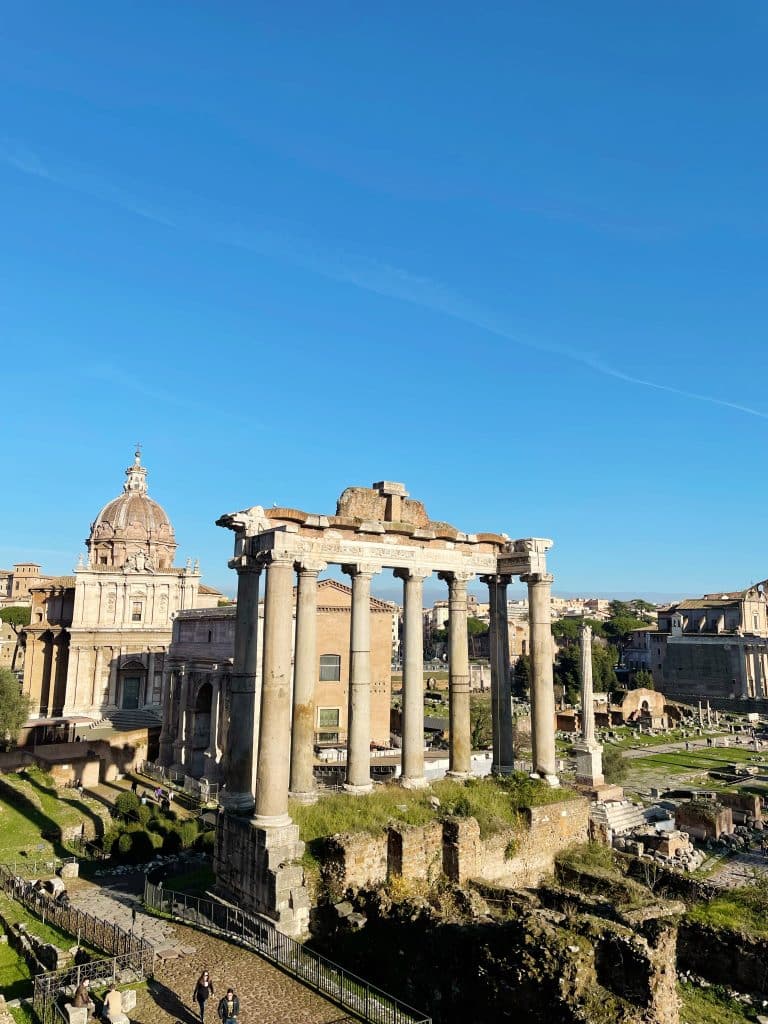
The last remains of the original relic are the eleven Corinthian columns and a wall that is now built into the adjacent Palazzo della Dogana di Terra; a 17th-century building for goods arriving in Rome.
When visiting, you will find a tiny room that introduces you to the fascinating history of Tempio di Adriano through a 22-minute video. Something that stood out to me is the deep appreciation there was for the wives of the emperors. In fact, this temple honors both the emperors who ruled and their wives.
Il Tempio di Adriano is the perfect hidden gem for those who want to learn more about Ancient Rome and the story behind the architecture.
Arco dei Banchi
- 💰 Price: FREE

The dreamiest hidden gem of Rome! “Arch of the Bankers” is an ancient Roman arch in the heart of Rome that dates back to the 16th century.
In the Renaissance period, this place was filled with desks of shopkeepers, but mostly bankers, scribes, and merchants who would work there.
The most famous and important banker of Rome was Agostino Chigi “Il Magnifico”, who at the time was likely the richest man in Europe.
As the treasurer of the Church, Agostino had commercial relations with all of Europe and controlled the expenses of the Pope and even the exile of the Medici family.
If you are a sucker for starry skies and the color blue – don’t miss out on this beautiful, little spot! Dedicated to Hail Mary, this arch is home to a Hail Mary painting from the 1800s.
Galleria Sciarra
- 💰 Price: FREE

This hidden gem is a work of art that was constructed to become a shopping mall but never did.
The commissioner of this gallery was the Sciarra family, a rich and influential family during the 19th century. Here, beautiful Art Nouveau architecture and frescoes will surround you while sun rays pierce through the glass ceilings.
The artist of this gallery, Giuseppe Cellini, intended his frescoes to celebrate women in the different phases of life.
Walk here to cut through and get to the Trevi fountain, but also to enjoy the beautiful art surrounding you!
As a note for my fellow celiac foodies, in this area, there is one of the best gluten-free restaurants in Rome, Pizza in Trevi! Along the restaurant, there is also one of the best gluten-free gelaterias, Gelato G Italiano.
Palazzo della Civiltà Italiana – Colosseo Quadrato
- 💰 FREE to visit outdoors and walk under the arches. If there are any exhibitions, you will need a ticket to enter those.

Have you ever seen a Squared Colosseum? Now you will! 😍 Palazzo della Civiltà Italiana, nicknamed Colosseo Quadrato, is an important example of Rationalist architecture – a style that dates back to the early 20th century in Italy.
This building’s origins are not nice ones, as they tie back to Mussolini’s years. This building was Mussolini’s office for many years and even has his full name hidden through the number of arches of the squared Colosseum.
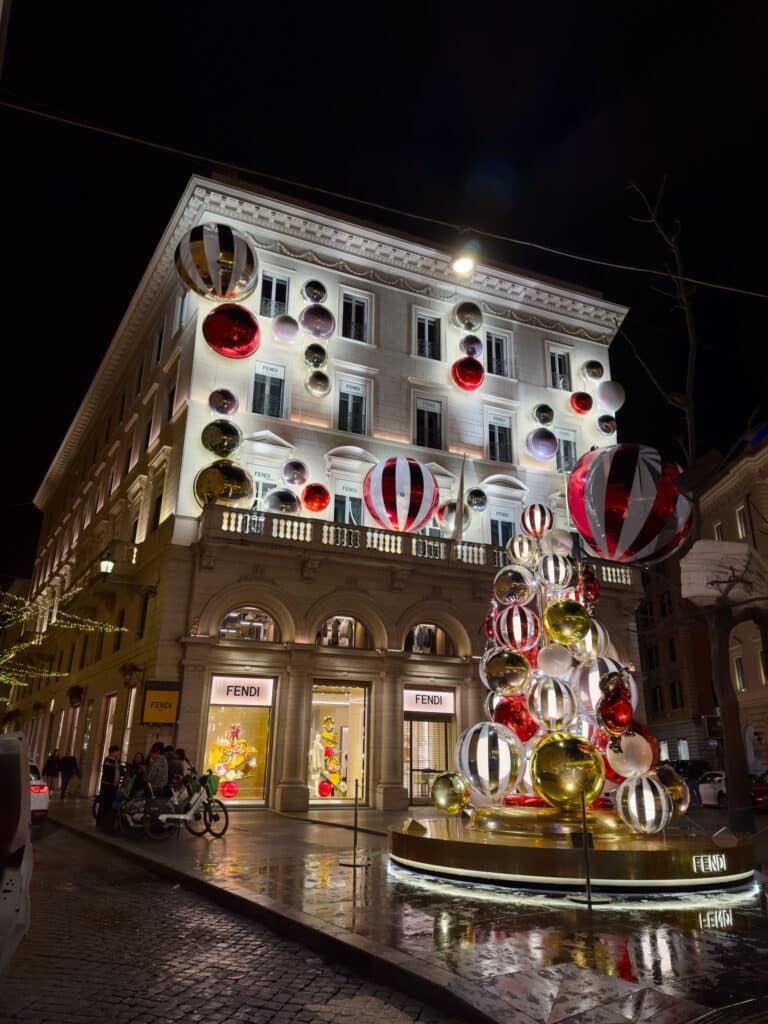
Thankfully the building now only represents Italian architecture and culture. Since the 21st century, this Colosseo Quadrato has been a venue for cultural events, exhibitions, and the Fendi Headquarters (2013).
Hidden Gems in Rome: The Religious Sites
Santa Maria in Aracoeli
- 💰 Price: FREE

Santa Maria in Aracoeli, “Altar of Heaven”, dates back to the 6th century and its current façade to the 12th century.
This church, like many other religious sites in Rome, is nothing short of a work of art. This is another hidden gem I classify as “hidden in plain sight”, and is one I’ve walked past for 24 years and never visited until recently.
If you’ve already been to Rome, you definitely walked past this hidden gem – but likely didn’t visit due to its façade and long staircase.
Sant’Agnese in Agone
- 💰 Price: FREE

Another “hidden in plain sight” work of art! Sant’Agnese in Agone is in the heart of the iconic and beautiful Piazza Navona. This is a BREATHTAKING 17th-century Baroque church, so watch out if you have asthma.
Apparently, this building stands on the grounds of a church dating back to 300 AD. It also happens to have an interesting legend about the martyring of Sant’Agnese. The legend is that when executioners stripped Sant’Agnese, her hair miraculously grew and covered her body.
If I got a euro for every time I visited Piazza Navona, I’d probably be able to afford Prada sunglasses. Why have I never visited? I always thought it was part of the Brazilian Embassy’s building and not accessible.
This is easily one of my favorite hidden gems in Rome!
Basilica of Santi Apostoli
- 💰 Price: FREE

Another Roman religious site and work of art! The Basilica of Santi Apostoli is a 6th-century Roman Catholic parish, a titular church, and a minor basilica.
As one of the oldest churches in Rome, the Basilica of the Twelve Holy Apostles has a rich history and has gone through various reconstructions throughout the centuries.
Something beautiful to admire is the ceiling of this basilica, which has a spectacular 3D effect on the paintings!
Basilica San Paolo Fuori le Mura
- 💰 Price: FREE

Welcome to one of Rome’s four major papal basilicas! Basilica San Paolo Fuori le Mura is the second largest after St. Peter’s Basilica (The Vatican). Personally, this basilica is one of the biggest works of art in Rome!
In 313, Emperor Constantino put a stop to the persecution of Christianism and had two basilicas built on the top of the tombs of St. Peter and St. Paul.
The St. Paul basilica lies outside the “walls of Rome”, because this is where St. Paul the Apostle was decapitated in 67 DC.
Throughout the many centuries, this basilica has gone through various reconstructions, with the major one being in 1823 after a grave fire. The basilica was officially reopened in 1840.
In this basilica, you will find endless Popal portraits lined up throughout the walls. This is due to a practice from the years 440 and 461, in which each new Pope had a portrait. However, due to the infamous fire in 1823, only 40 portraits survived.
Due to this, the current series of portraits we see began back in 1847 with Pope Pius IX (1846-76). The legend is that when the basilica runs out of spots for the portraits, that will mean we have had the last Pope and that the world will end.
This is easily one of the most spectacular hidden gems in Rome, and it’s hard to believe it receives so few visitors!
Hidden Gems in Rome: Art & Culture
Villa Borghese
- 💰 Price: FREE access to the gardens. Museums and Galleries will have entrance fees.
Welcome to the third-largest public park in central Rome! This picturesque landscaped garden is home to various buildings, museums, and attractions. Some specific points of interest include the Rome Zoo, Borghese Gallery, and Pincio’s Water Clock.
Villa Borghese is the perfect spot for an afternoon walk or a city break within the city.
Villa D’Este (UNESCO World Heritage Site)
- 🗺 Tips: Are you an Italian citizen living abroad, registered with AIRE? Or a European Citizen 25 and under? If so, bring your documents to prove it and get free entrance or discounted tickets.

Have you ever wanted to put on a dress and run around like a princess through the magical gardens of a villa? Well… this place will make you want to do just that!
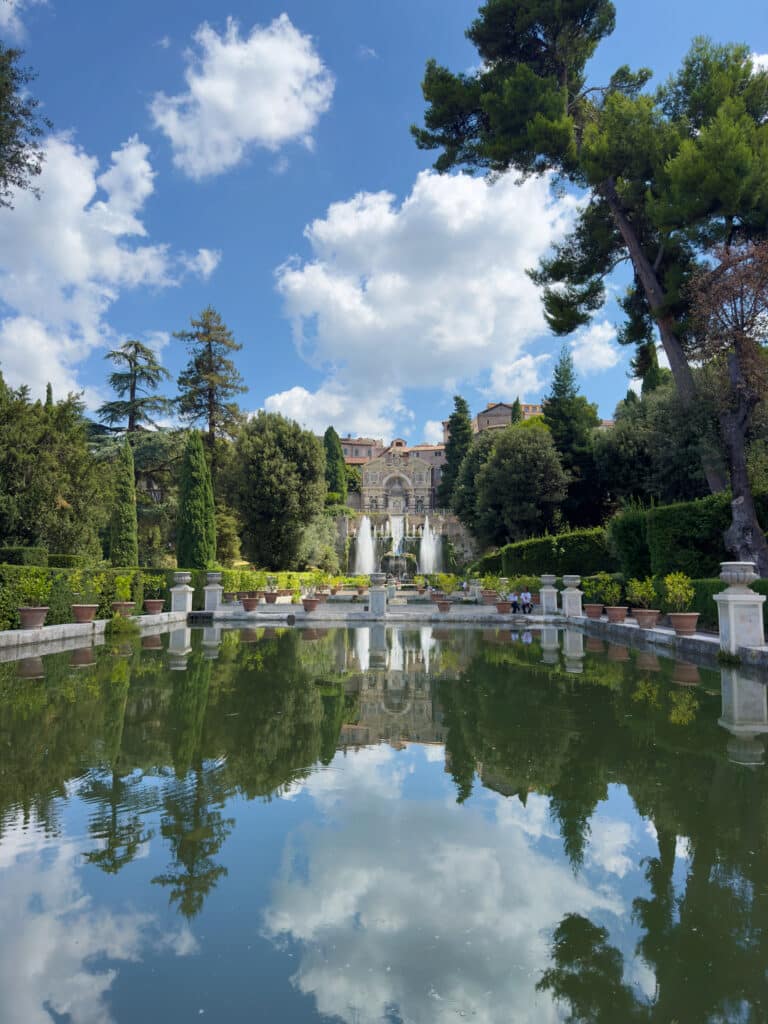
Villa D’Este is a marvelous Renaissance villa from the 16th century and a UNESCO World Heritage Site.
This villa is famous for having one of the world’s most beautiful gardens. This garden has been and continues to be, a model for the development of European gardens.
✨ Check out the full Tivoli Day Trip Itinerary for further informations, photos, & local tips
This wondrous place is located in Tivoli, a beautiful, small ancient town sitting an hour away from the city center. If you are spending a few days in Rome, this is the perfect day trip and is absolutely worth it!
If you want a stress-free day trip, where you simply sit back and relax with the planning and commuting, this guided day trip to Tivoli from Rome could be the perfect solution for you! Book today to save your spot.👇
Villa Medici
- 💰 Price: Regular entrance is €14. Between 18-24 it’s €11, and under 18 is FREE.
This magnificent villa is a Renaissance palace and garden complex commissioned by Ferdinando de’ Medici.
The architecture showcases a harmonious blend of architectural styles – ranging from Baroque influences to Mannerist and classical. Mesmerizing fountains, statues, and terraces adorn the garden, creating a serene oasis.
The Villa Medici now serves as the French Academy, a place that fosters intellectual and artistic exchange between Italy and France.
Villa Farnesina
Remember Agostino Chigi, Rome’s most important banker during the 16th century? This magnificent Renaissance villa was built for him!
This villa is known to be one of the most noble and harmonious creations of the Italian Renaissance; it is a statement of the artistic richness and opulence of the era. Visit the villa, which is now an art museum, to surround yourself with endless frescoes and elegant architecture.
Galleria Doria Pamphilj
- 🗺 Tips: Tickets are non-refundable, nor changeable. Buy the ticket on the day off to ensure you’re good to go. Tickets bought online cost an additional euro.
The Galleria Doria Pamphilj is an art gallery that is home to one of the largest, private art collections in Rome and showcases various European masterpieces.
This gallery is within the historic Palazzo Doria Pamphili, a Renaissance palace of the opulent Phamphilj family.
Here you will find renowned artists’ work, including Caravaggio and Bernini. If you are an art and Italian culture lover – this certainly is the perfect gem for you to visit!
Natural Beauty Hidden Gems
Roseto di Roma & Giardini degli Aranci
- 💰 FREE
- 🗺 Tips: Visit earlier in the day for the little crowd, or during the hot afternoon for some nice shade.ng the hot afternoon for some nice shade.
Sitting a 3-minute walk away from each other is the Roseto di Roma (Rose Garden) and the Giardini degli Aranci (Gardens of the Orange Trees).
These beautiful gardens are a short walk from Circo Massimo and Bocca della Verità (Mouth of Truth) – making them serene oases in the city’s center.
The Roseto di Roma is home to over 1,100 roses from all over the world – including China and Mongolia.
The idea behind the creation of the Rose Garden of Rome comes from Countess Mary Gailey Senni and her love, and knowledge of, botanics. American-born, she married an Italian count and lived in Italy.
Appia Antica
- 💰 Price: FREE
The Appian Way is a historic and legendary Roman road with origins dating back to 312 BC, making it one of the first and most important ancient Roman roads.
Stretching over 16 km, marvelous ancient ruins, catacombs, archeological sites, line this gem. The Appian Way is also incredibly picturesque with endless cypress trees adorning it – making it the perfect spot for history and nature lovers.
The Appia Antica is accessible to the public, meaning you can freely stroll around with no entrance ticket. However, there are some specific attractions and services, like catacombs and guided tours, which have fees.
Unique & Quirky Hidden Gems
Buco della Serratura (Knights of Malta Keyhole)
- 💰 FREE
- 🗺 Tips: Visit around 9:30 am – around 10:30 people will start to line up to visit and peep through.

What if I told you, you could get the coolest view of St. Peter’s Basilica through a tiny keyhole in a green door? You read that correctly!
The Knights of Malta Keyhole is located on the Aventine Hill in Rome, a short walk from the Mouth of Truth. This keyhole is part of the headquarters of the Sovereign Military Order of Malta; this was an ancient religious order that dates back to the 11th century.
This attraction, Buco della Serratura, symbolizes a perfect intersection between architecture, history, and spirituality.
This is easily one of the craziest hidden gems of Rome.
Terrazza Belvedere Aventino
- 💰 FREE
- 🗺 Tips: Visit in the morning, after seeing the Knights of Malta Keyhole.

After peeping through the Knights of Malta Keyhole, come to this other hidden gem for spectacular views above Rome. Located in the Gardens of the Orange Trees, this is the perfect spot for peaceful strolls and simply taking Rome in.
Largo di Torre Argentina Cat Sanctuary
- 💰 Price: FREE
This spot always gives me Aristocats vibes – as in the Italian-dubbed version, the cat Romeo is from Rome.
If you’re a cat lover, you simply must visit! At this cat sanctuary, you can admire all the cats strolling through the ancient Roman ruins; which also happens to be the place where Caesar died.
All the cats here are taken care of by the sanctuary, and for anyone interested – you can make donations, or adopt from a distance, to help them continue their mission!
I honestly think this is one of the most iconic hidden gems in Rome.
Galleria Spada: Borromini Perspective Gallery
- 💰 Price: Regular ticket is €5. EU Citizens below 18 or above 65 enter for free. EU Citizens from 18-25 pay €2for entrance.
Galleria Spada is a gallery that showcases a small art collection from the 16th and 17th centuries and is known for one particular work of art. Some of the artists found in this art collection are Caravaggio, Guercino, and Titian.
The main work of art in this palace is, without a doubt, the forced perspective gallery by Borromini. This 17th-century perspective gallery creates an optical illusion as it leads to the heroic statue of Mars.
It turns out that the corridor and the sculpture are much shorter than they seem – but the optical illusion makes them seem both longer and larger.
Mausoleo di Augusto
- 💰 Price: Regular entrance is €5. Learn more here.
Welcome to the tomb of the first Emperor of Rome, Emperor Octavian Augustus, which dates back to 28 BCE. It is said that Emperor Octavian Augustus took inspiration for his tomb from that of Alexander the Great in Alexandria.
Throughout the many centuries, this mausoleum has been the property of various people who would made reconstructions and changed the purpose of the building.
For example, in the 18th century, this burial site was used as a bullfighting ring – “Giostra dei Tori”. In the 1900s, it became a concert hall.
It wouldn’t be until 1936, that fascist dictator Mussolini would close the Mausoleo di Augusto to have it restored to an archeological site. The last restoration took place in 2016, and only recently reopened to the public.
As a fun fact, this mausoleum faced directly toward the Pantheon’s entry.
Graffiti
Rome has endless, fun, and beautiful graffiti scattered throughout the city and its neighborhoods. When walking around the city, try to keep an eye out for street art – you could even turn it into a game and see how much graffiti you “collect” during your travels! 😆
There were many other graffiti to share – so this is in honor of the new Barbie movie! 👗

Hidden Gems of Rome: The Neighborhoods
Quartiere Coppedè
Welcome to the dreamiest, fairytale-like neighborhood of Rome! This hidden gem differs from other neighborhoods with its unique and enchanting architecture – a work of art by Gino Coppedè in the 20th century.
In the Coppedè neighborhood, you will witness a fusion of different architectural styles – from Gothic to Art Nouveau, and Baroque. Within the intricate details of the architecture, you will find mosaics and fantastical creatures – making it a must-see for those seeking architectural marvels.
Jewish Ghetto
- 🗺 Tips: Eat here!! Especially the famous artichokes when in season!
Established in 1555, this is one of Europe’s oldest Jewish communities. As vibrant and culturally rich as it is – this neighborhood is DEFINITELY a must-visit and a must-eat!
This Jewish Ghetto, along with worldwide Jewish communities, have gone through endless hardships and persecution throughout its centuries – a history that must never be forgotten, and never repeated.
What is beautiful about the neighborhood today is that it is THRIVING, and it is one of the most beautiful hidden gems of Rome! Asides from ancient ruins and historically-significant fountains, here you will find colorful architecture, a beautiful synagogue, and some of the best food in Rome and restaurants.
One of the most iconic dishes from the Roman Jewish community is the “Carciofi alla Giudia“. This is a dish of deep-fried artichokes.
As I mentioned above – this is a MUST visit and MUST eat at!
Hidden Gems of Rome FAQs
What are the best non-touristy things to do in Rome?
The best non-touristy things to do in Rome will depend on your own personal preferences and travel style.
Personally, one of the very best things to do is to let yourself get lost in Rome, wandering around the city with no plan, and just enjoying the Eternal City and her atmosphere – just like a Roman would. And with that, going to non-viral, or locally-recommended restaurants and food spots for a more authentic experience.
Are Rome’s hidden gems worth visiting on a first trip?
Because Rome is such an immense city, there are hidden gems in almost every corner of the – all of which you can easily visit and admire if you let yourself go off your itinerary or bucket list checklist.
Not only is it worth it, to visit Rome’s hidden gems, on a first trip – but it is essential to having a special Roman holiday that is unique to you! When you only visit the main attractions and focus on going from one spot to the next, you miss the most magical part of the city – the true essence of Rome and all its beauty that’s found in the nooks and crannies.
Where can you escape the crowds in Rome?
The Prati neighborhood is beautiful to walk around and often fairly empty, and the same goes for Piazza del Popolo and Villa Borghese gardens.
Essentially, most people tend to walk the same streets, following the crowds, so at times something as simple as walking on a parallel street can free you from heavier crowds.
Crowds in Rome are inevitable when you are visiting hot spots like the Fontana di Trevi, Colosseum, Trastevere, and Piazza di Spagna – but once you go off the beaten track it can be quite easy to find little, or spread out, crowds.
What is the best off-season month to visit Rome?
Late fall and early winter are incredible months to visit Rome – not always, necessarily off-season, but much better than the spring and summer time.
I personally love October and December in Rome, because crowds are smaller and the weather is great!
Last Recs
Being the Eternal City, give yourself time on your Rome travels to SLOW DOWN and LOOK AROUND YOURSELF with a deeper lens. I highly recommend wandering aimlessly around the city and simply seeing where you end up. Being in the city center, you are bound to encounter most of these hidden gems easily, as well as the main attractions.
📌 Pin this for your Future Italy Travels
Which of these hidden gems of Rome are you adding to your Rome travels bucket list? Let me know in the comments! 😊
If you found this blog post helpful, please share this with friends and family who may find this helpful.
Follow me on YouTube for my travel videos and other worldwide adventures, or on Instagram! 🗺️